
Room in Roof Insulation
Turn a freezing-in-winter, baking-in-summer loft conversion into a comfortable room you can use all year round.
Poorly insulated loft conversions are too warm in the summer and too cold in the winter as the inherent nature of the roof construction provides very little barrier from the external temperatures. Properly insulating rooms built into the loft space can transform these spaces from an extremely uncomfortable place to live and sleep in year round, to a consistent controllable temperature whether the sun is splitting the rocks or your driveway is frozen solid.
There are many methods of insulating the different elements of a Room In Roof and we can tailor your insulation design to suit your budget and appetite for upheaval.
Benefits
- Maintains comfortable temperatures year-round
- Prevents excessive heat in summer months
- Keeps rooms warm during winter
- Reduces energy consumption significantly
- Improves overall home energy efficiency
- Increases usability of converted spaces
- Adds value to your property
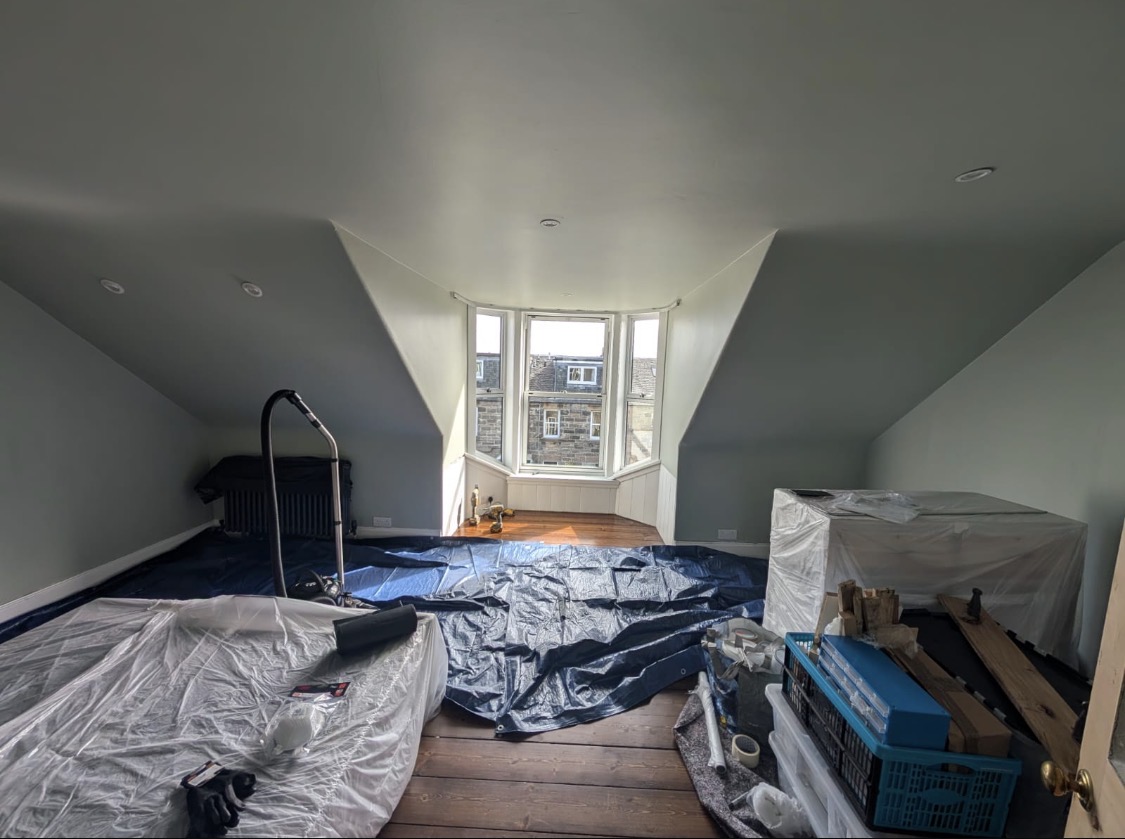
Hemp Insulation Method
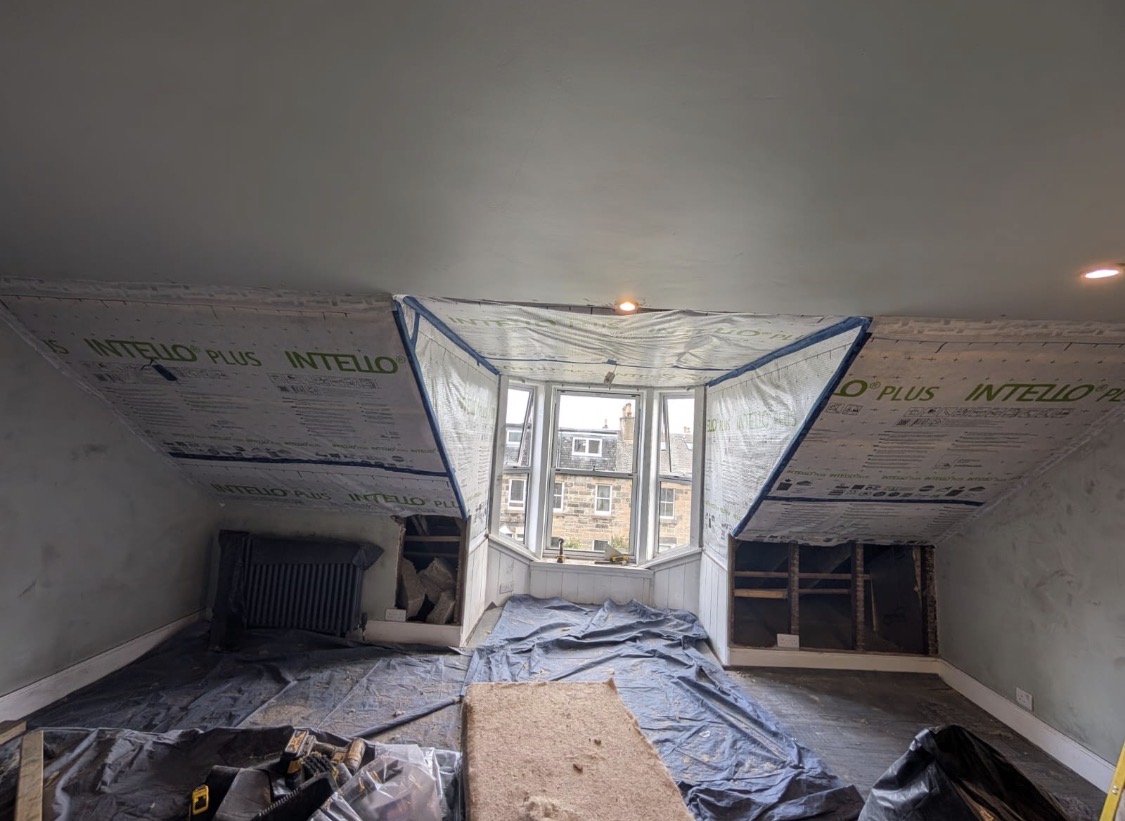
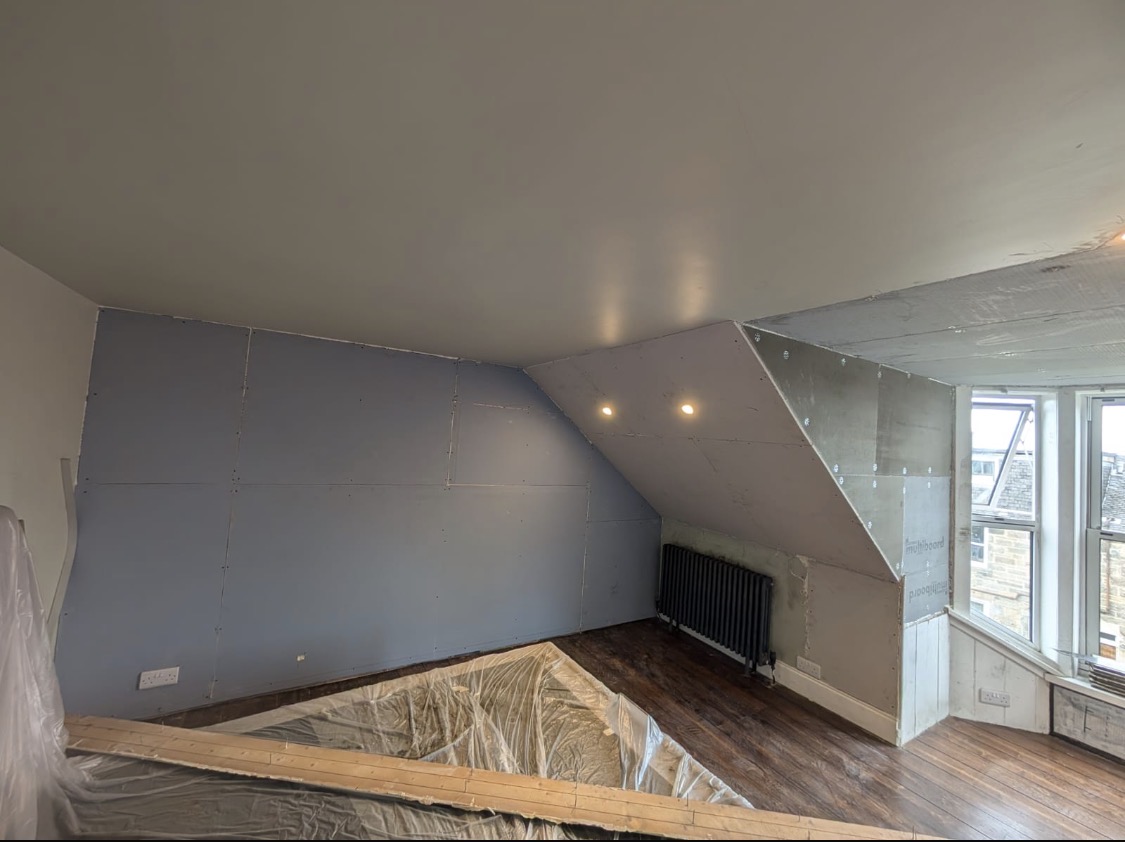
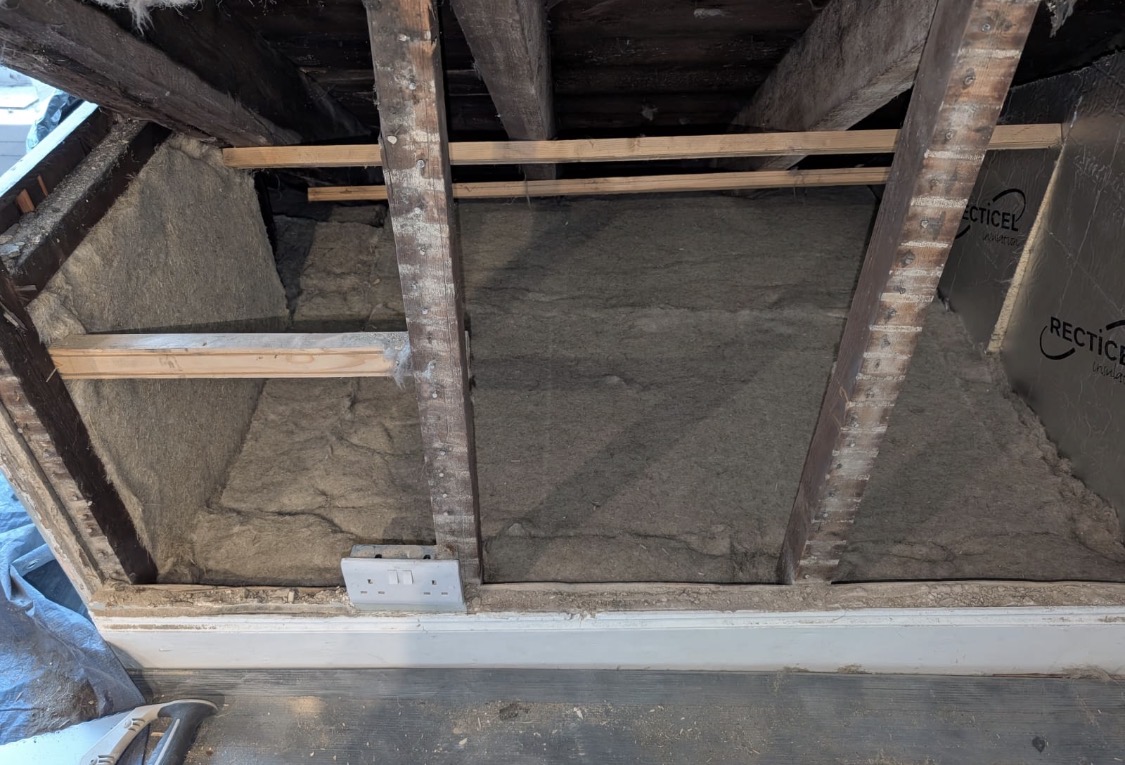
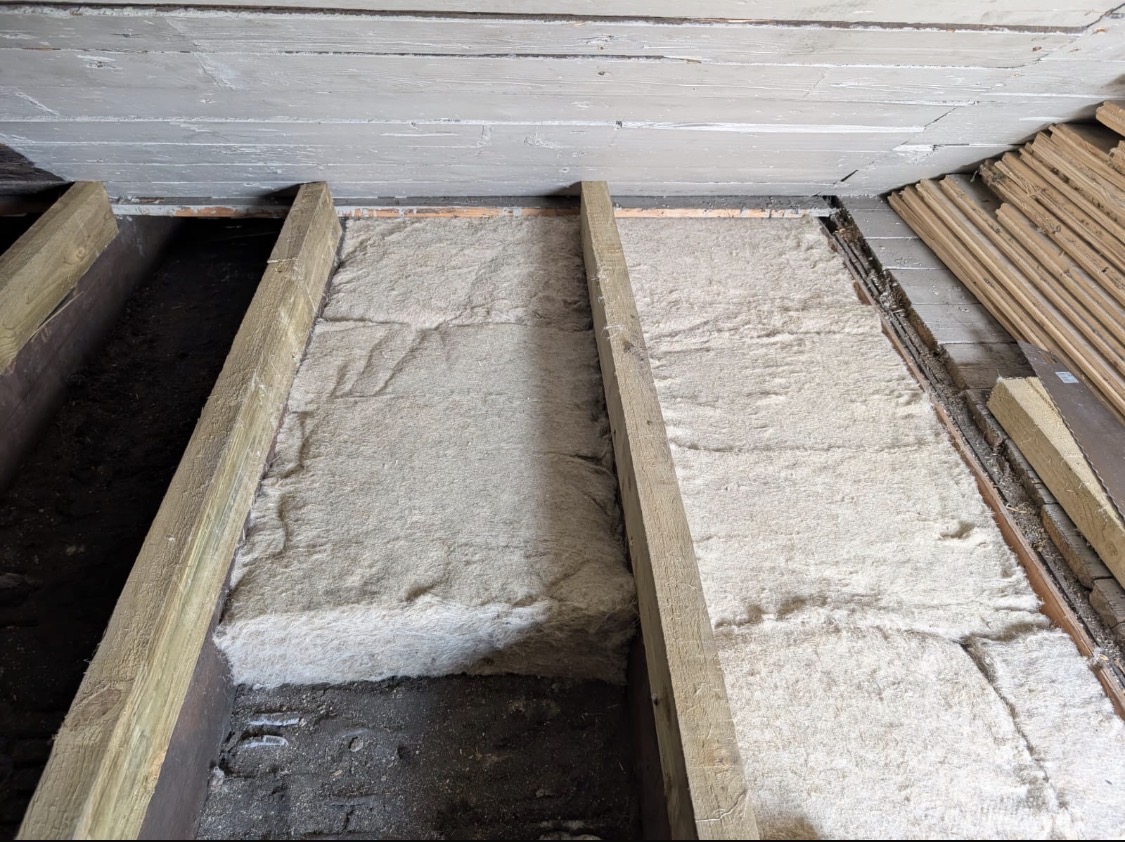
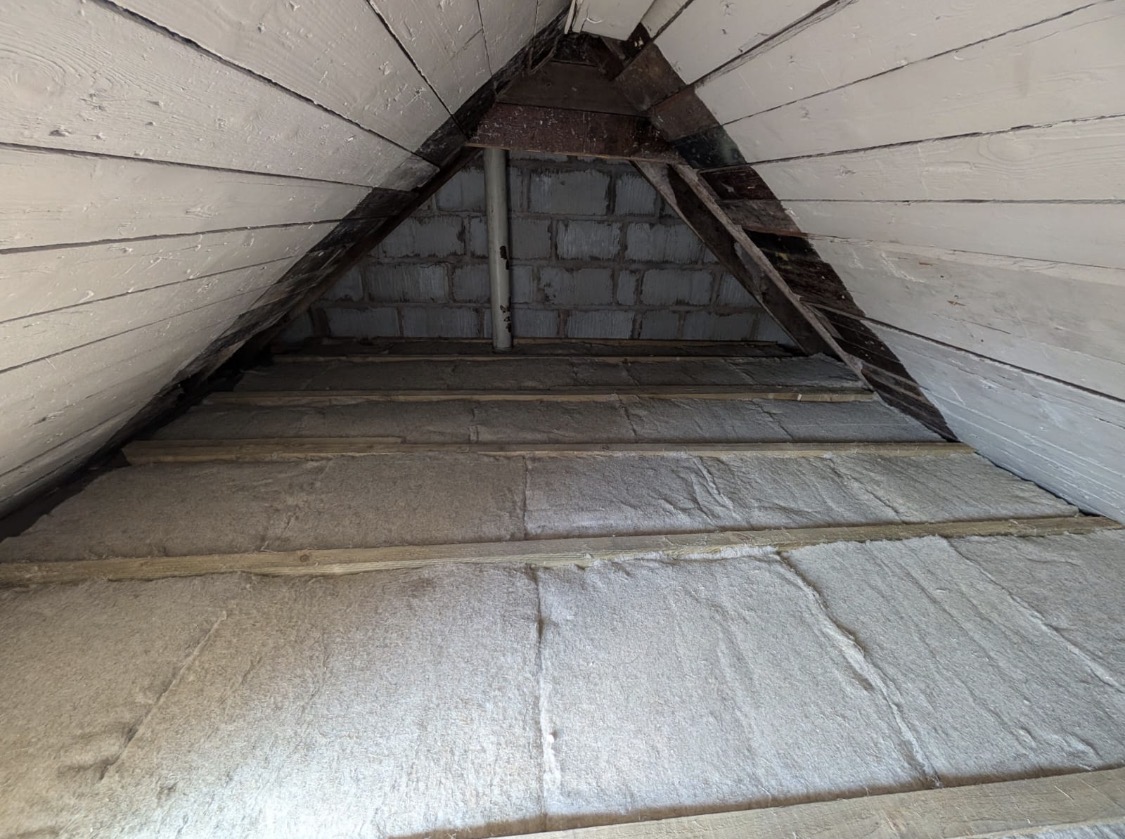
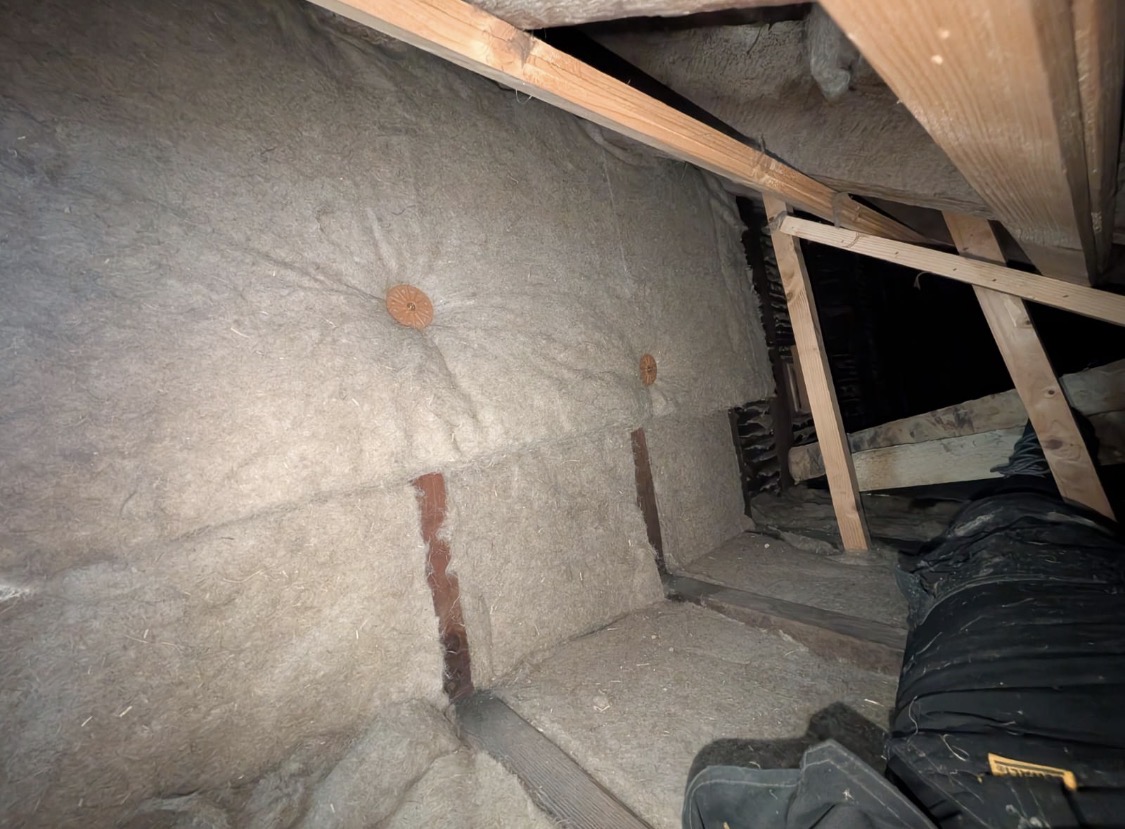
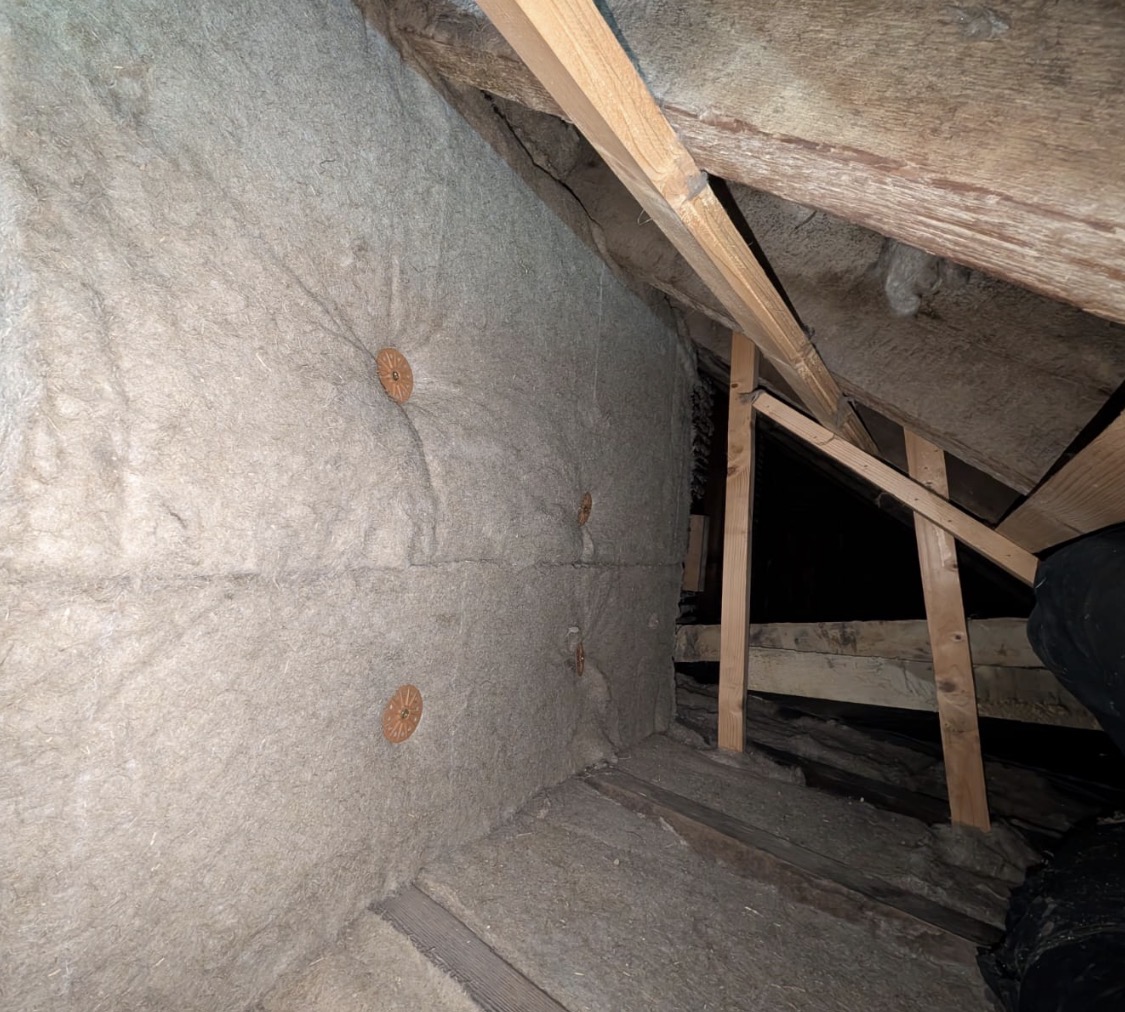
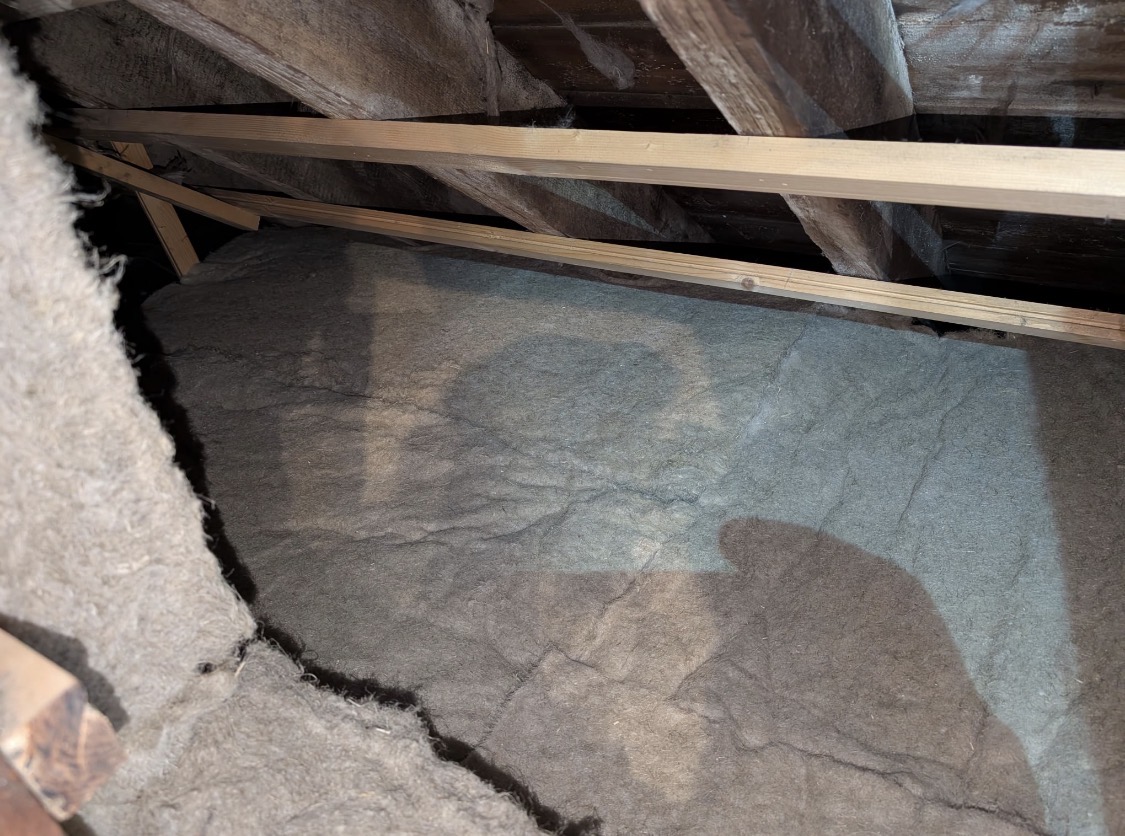
We consider our hemp insulation method to be the optimal way to insulate a Room in Roof as it pairs excellent thermal performance with high thermal mass and exceptional moisture management. This means you have an insulation system that performs exceptionally well in both the summer and winter extremes. The insulation is complimented with high quality membranes and airtightness tapes for a gold standard airtightness strategy that will perform exactly as it does on the day after installation as it performs in decades to come.
Typical cost: £10,000–£18,000
Process
- Step 01
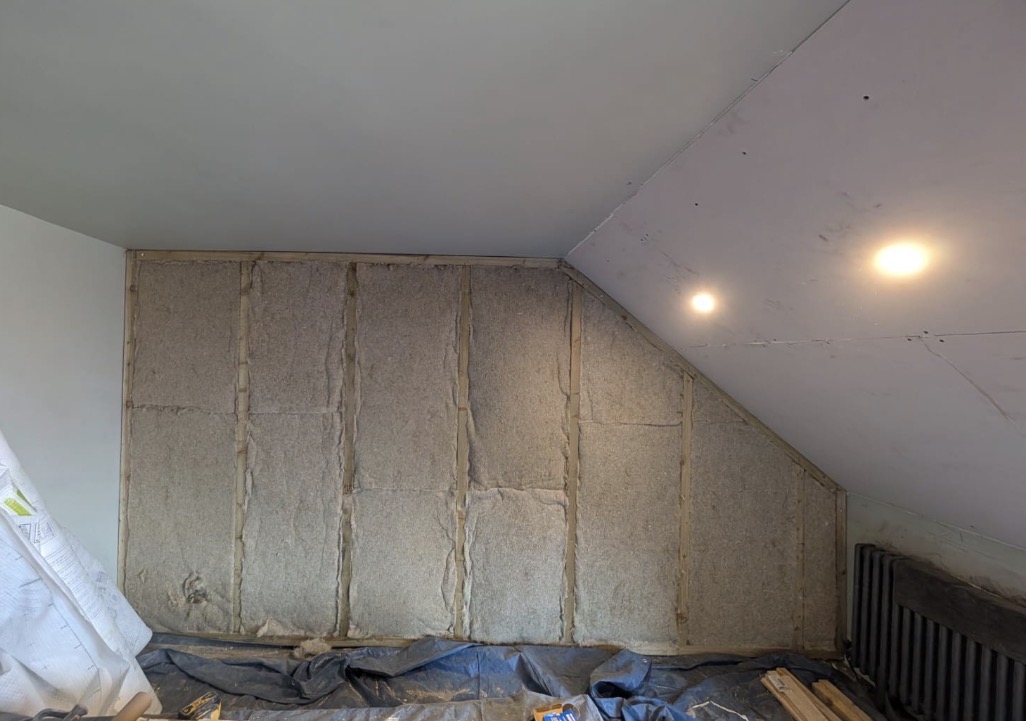
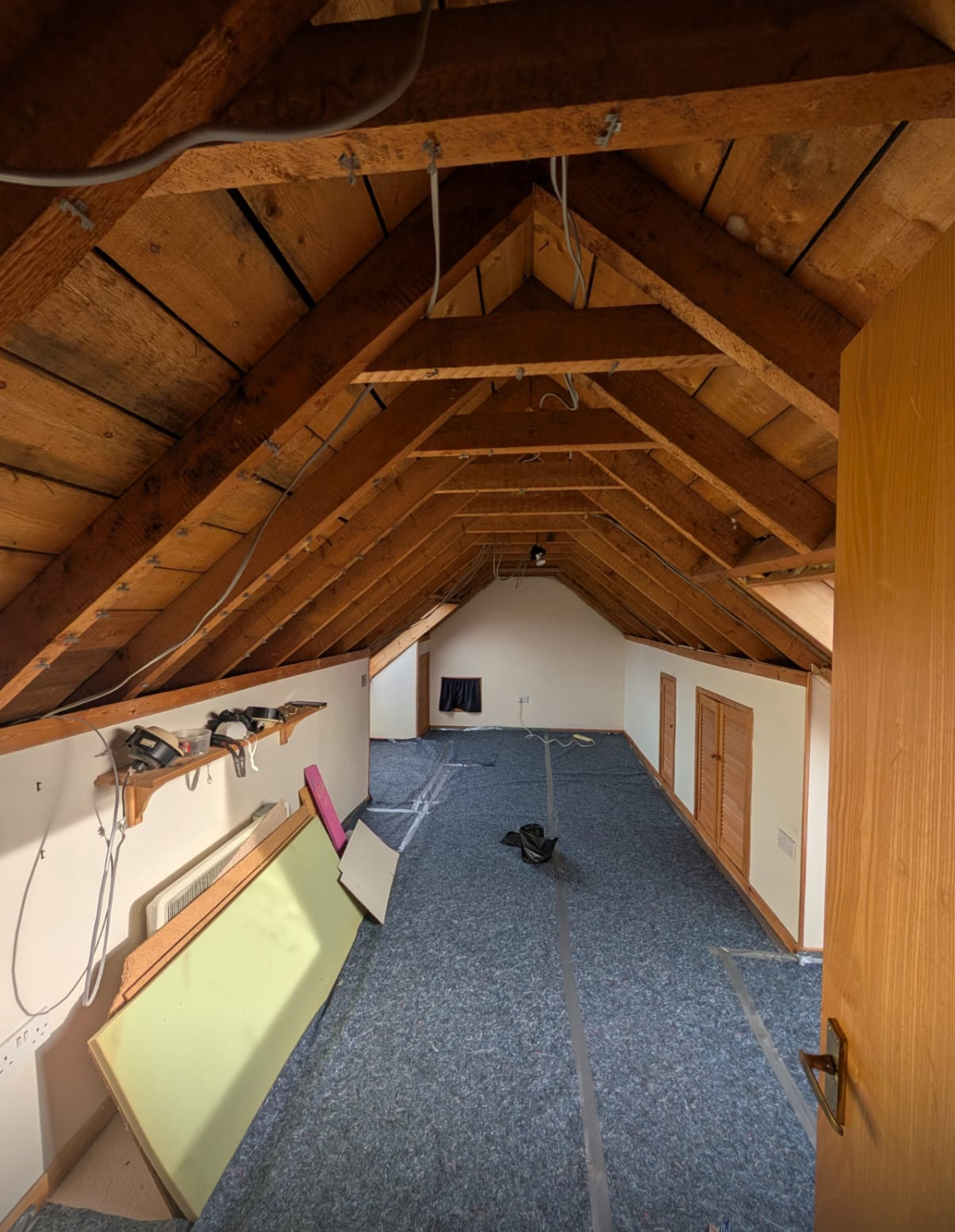
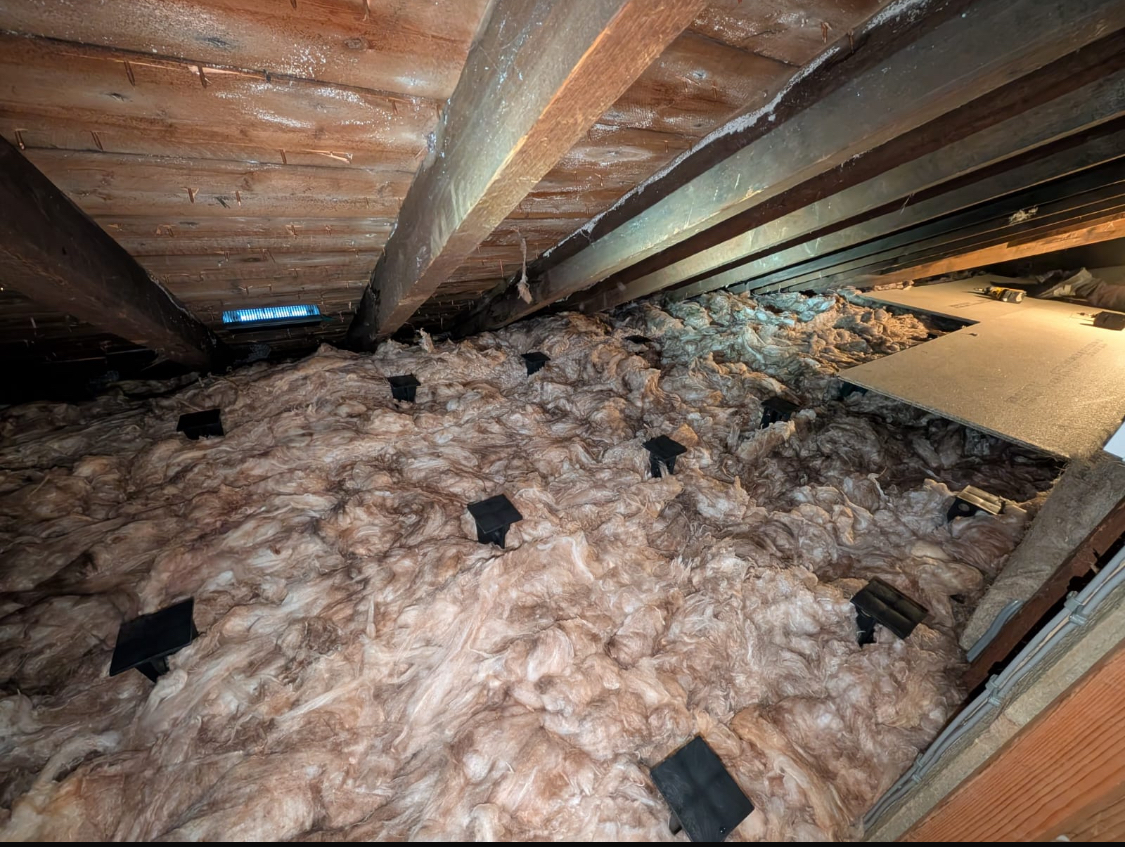
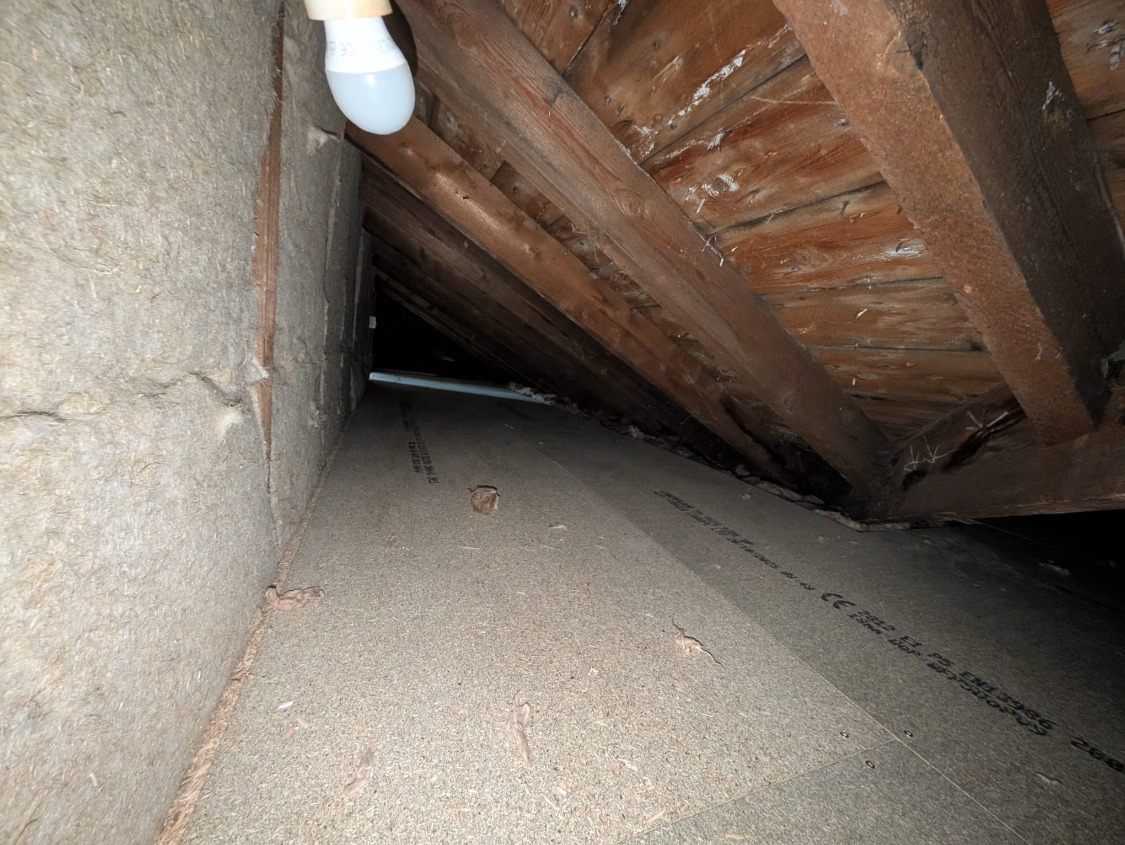
Residual loft spaces are insulated with between 200mm and 250mm of IndiTherm Hemp Insulation
- Step 02
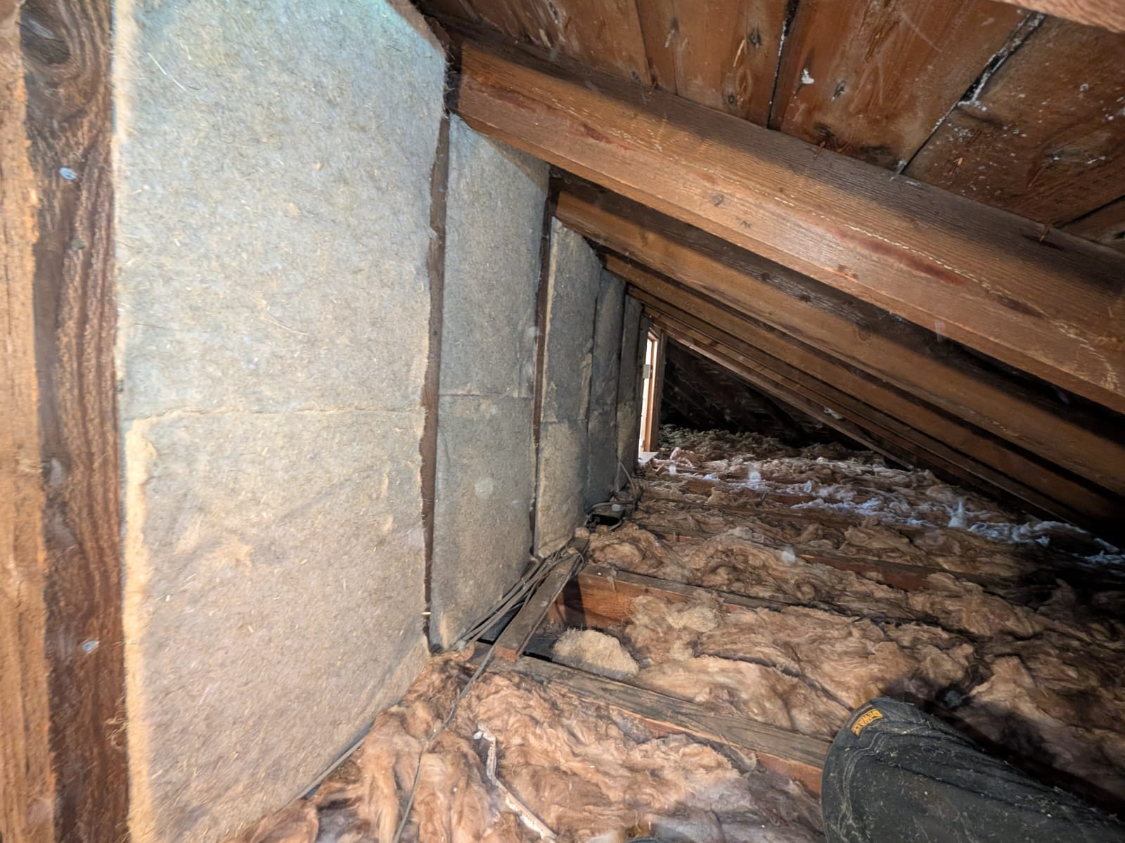
Stud walls are insulated with two layers of IndiTherm Hemp Insulation between and over the back of the stud walls
- Step 03
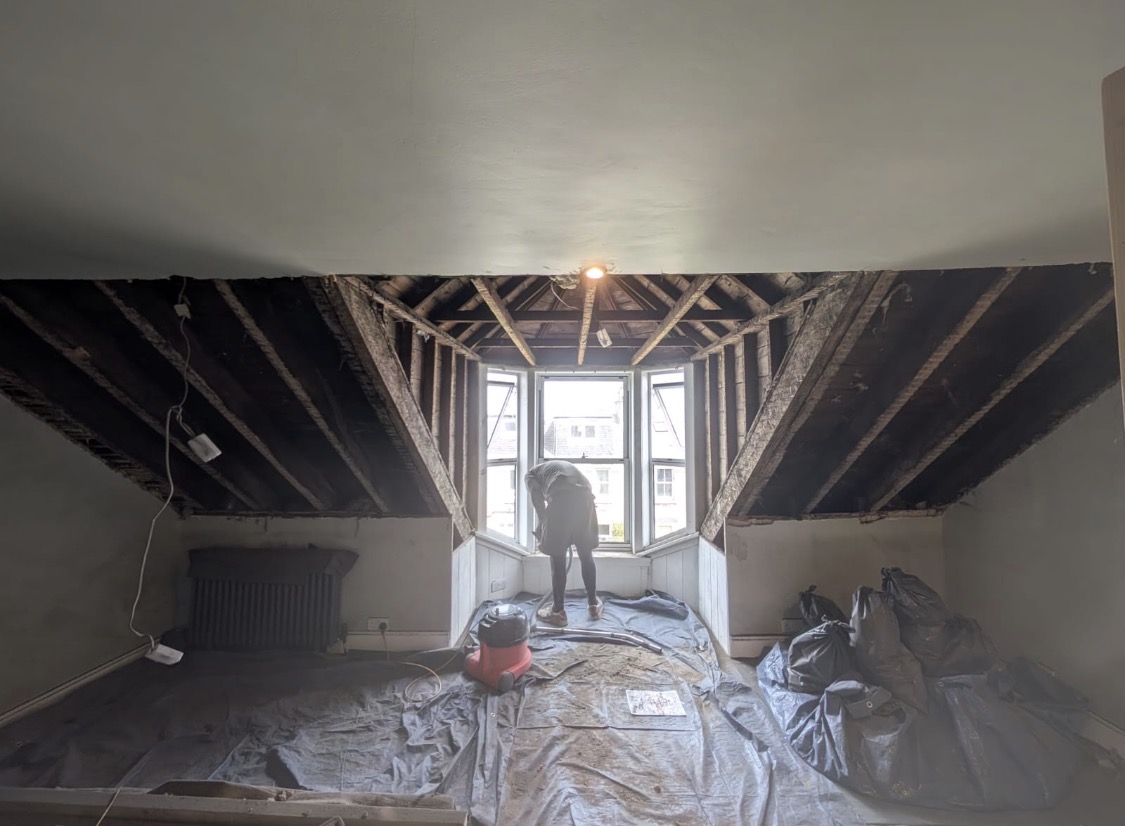
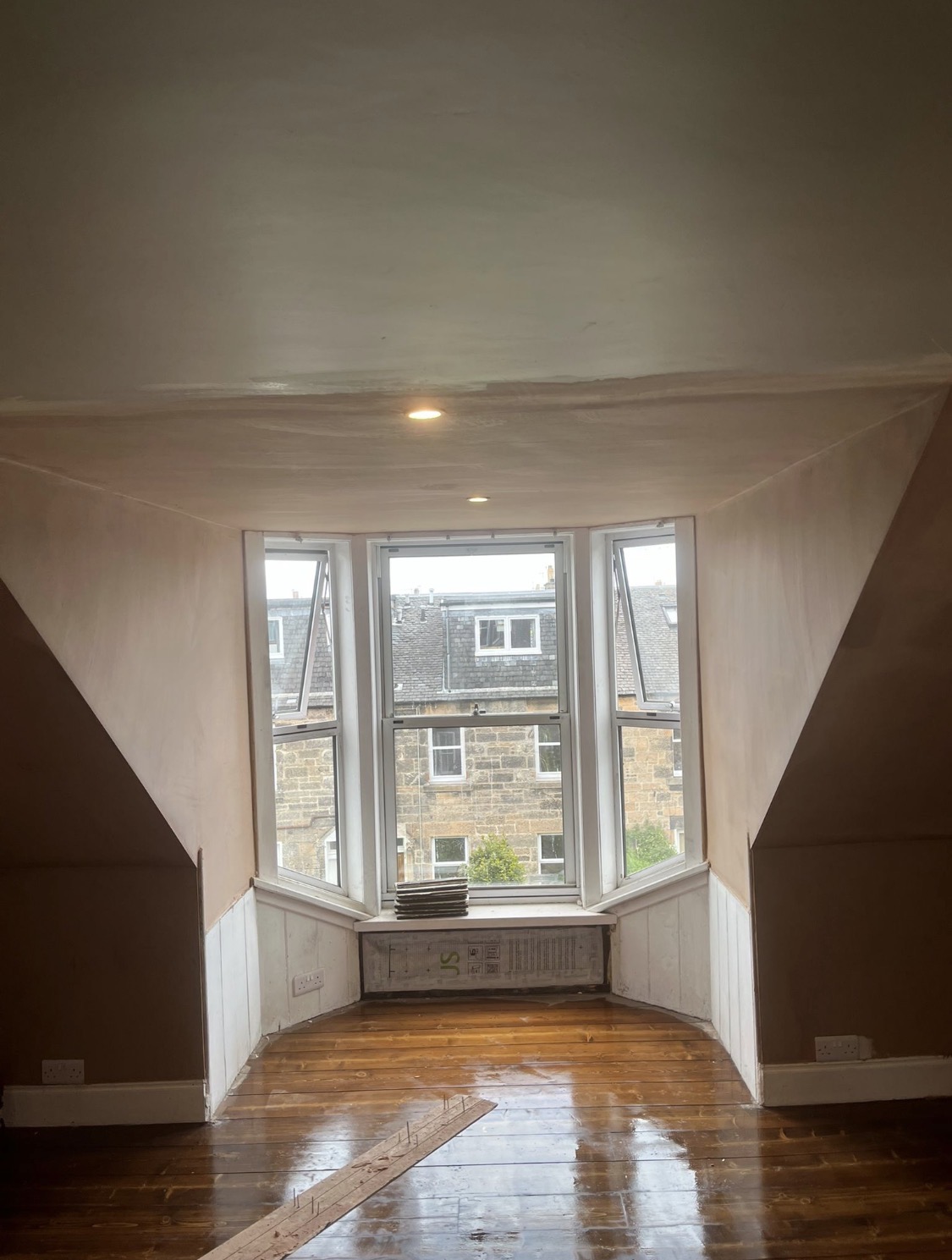
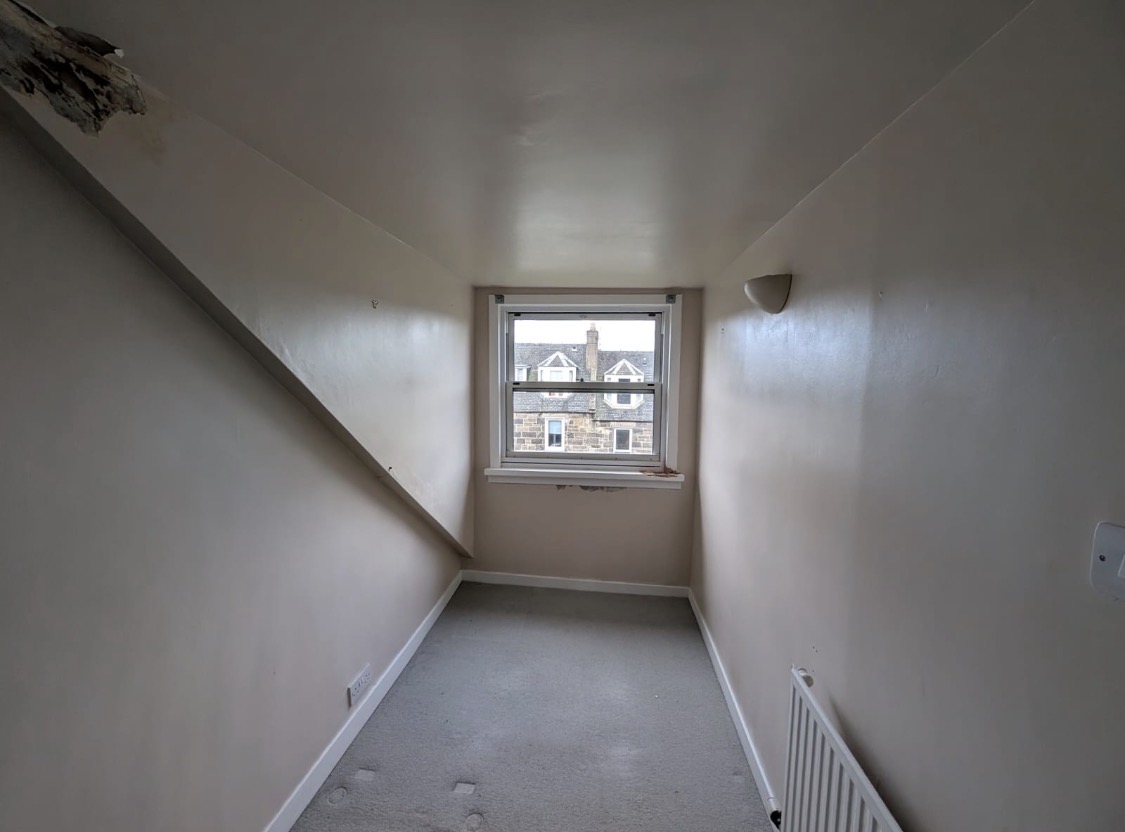
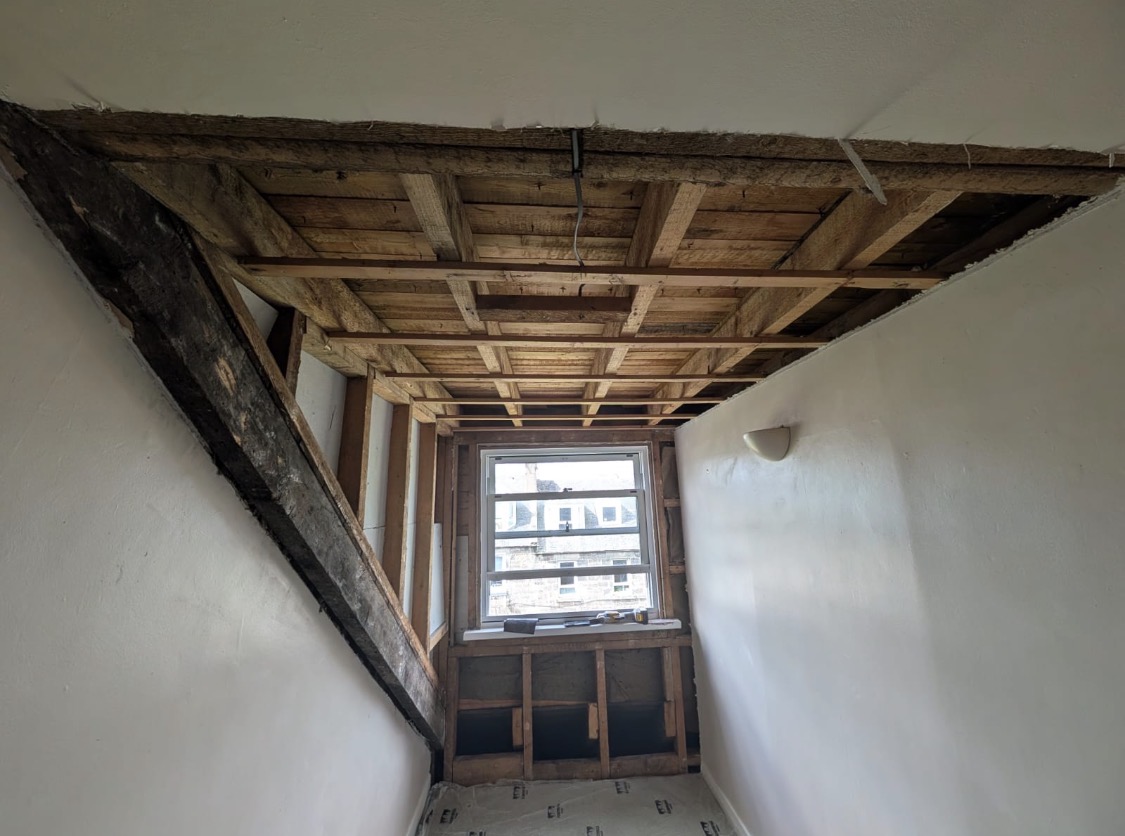
Sloping ceilings and dormers are stripped back and waste disposed
- Step 04
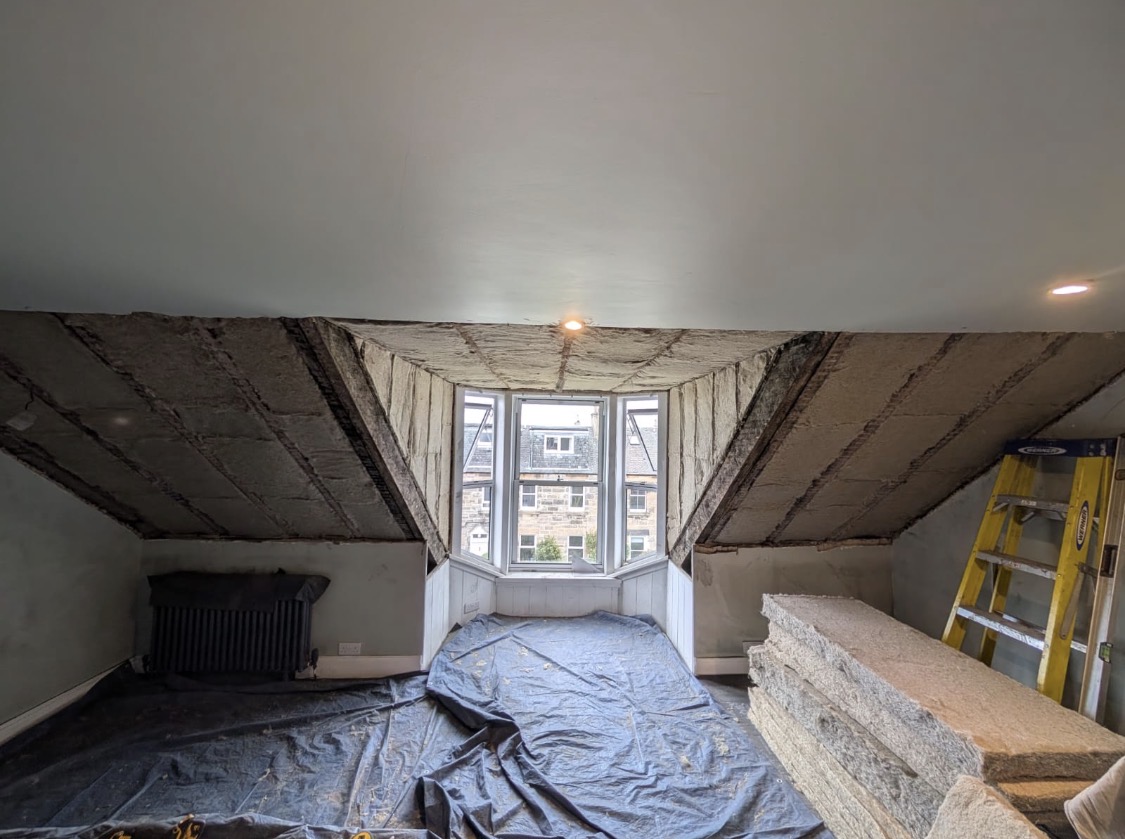
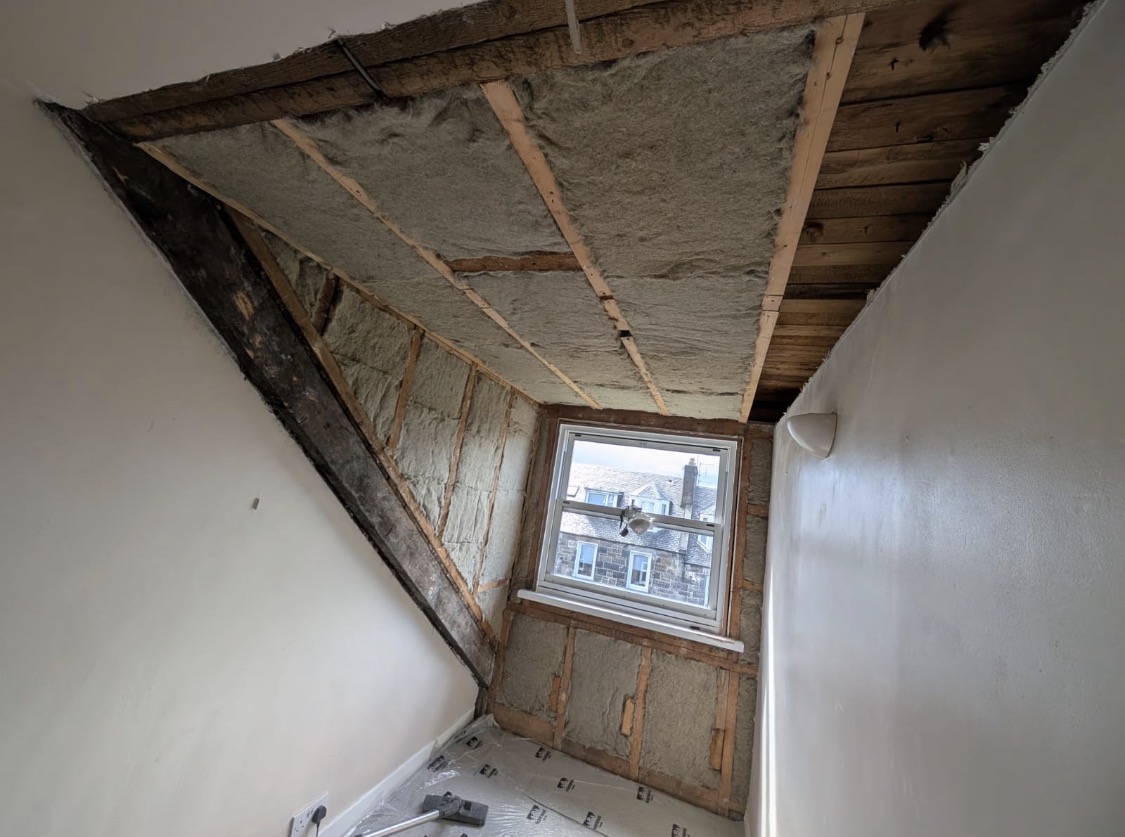
Optimal thickness of IndiTherm Hemp Insulation installed between the joists to leave 50mm air gap
- Step 05
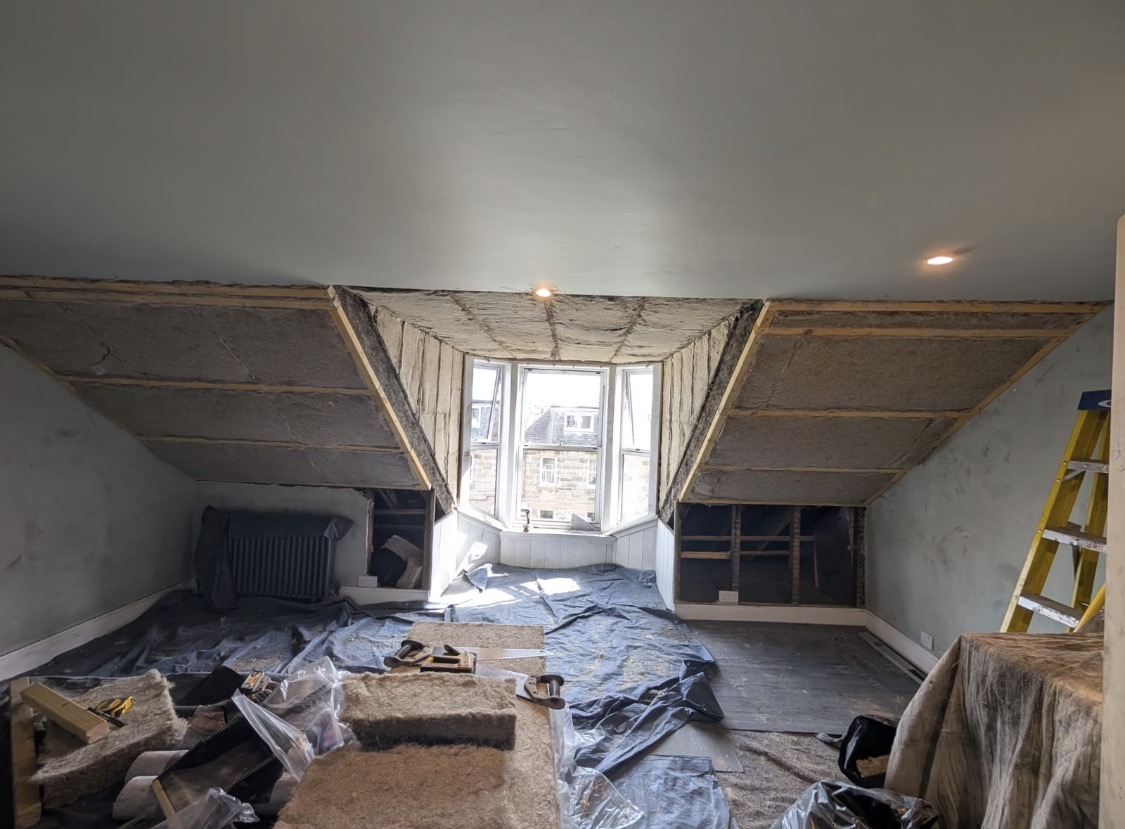
Sloping ceilings counter battened with 45mm UC3 timber
- Step 06
50mm IndiTherm Hemp Insulation installed between timbers to prevent thermal bridge
- Step 07
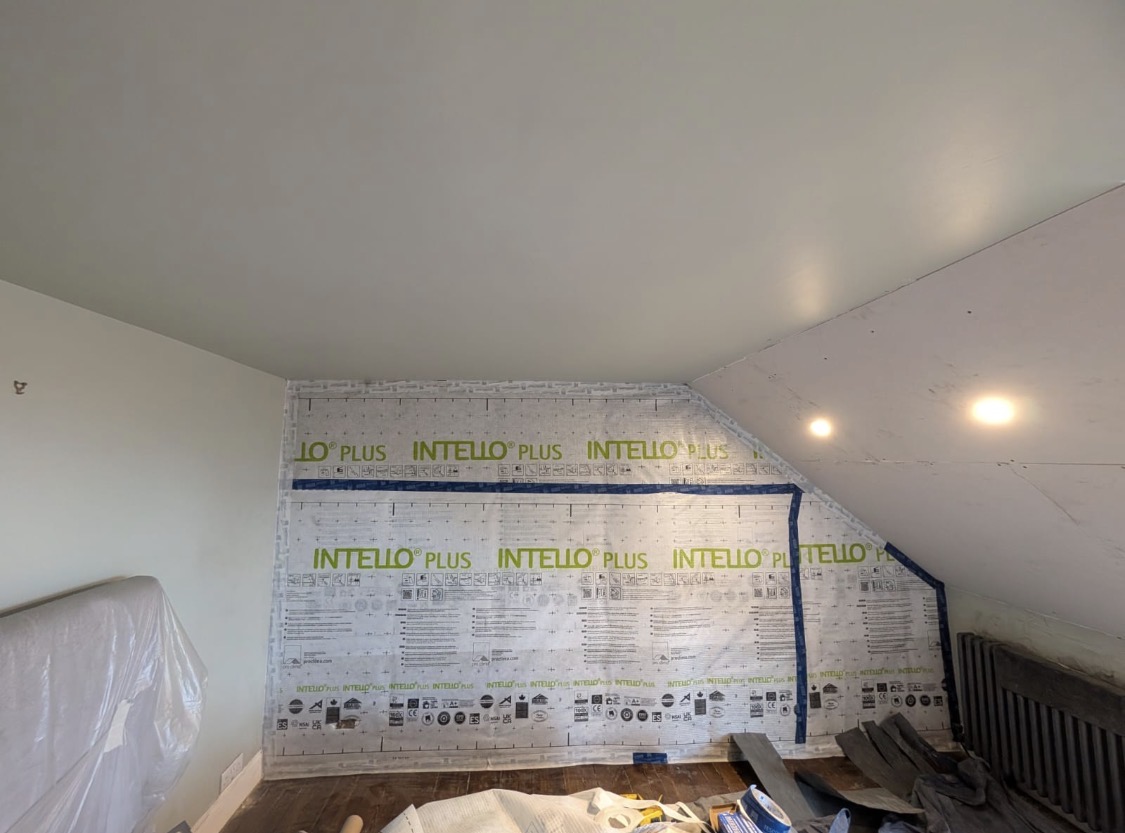
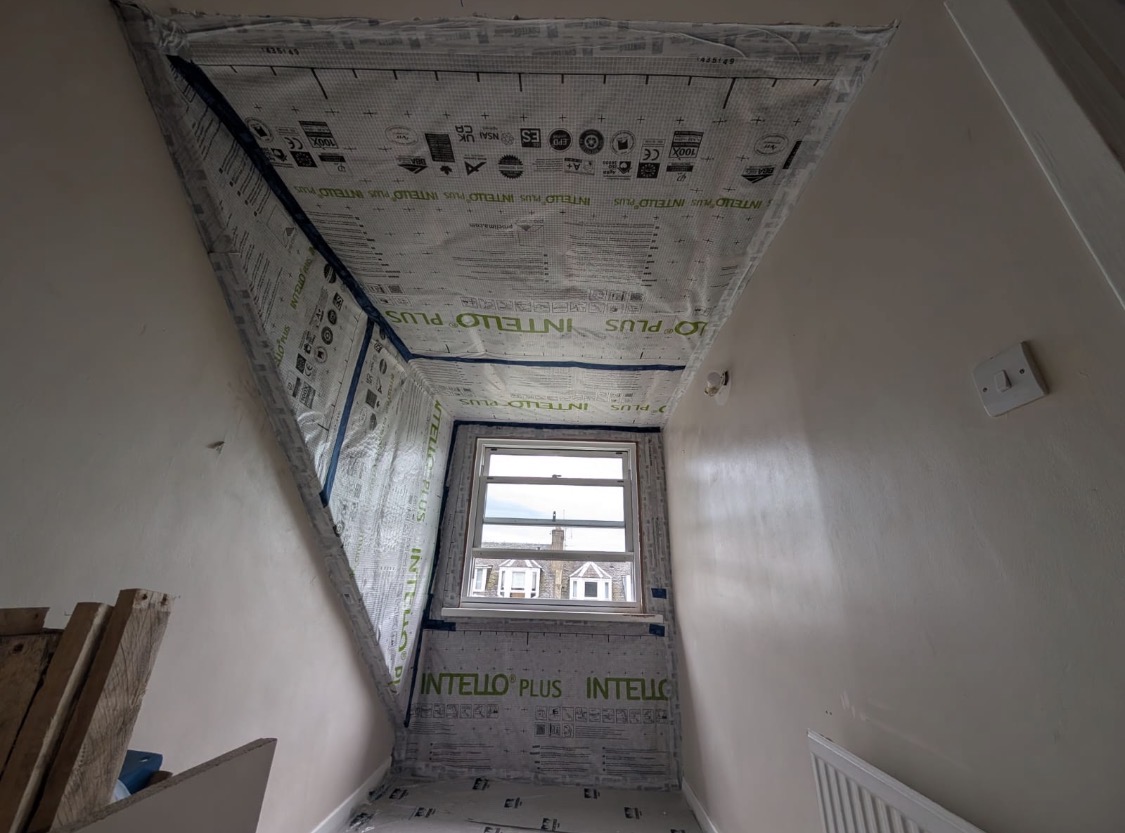
Pro Clima Intello Plus airtightness membrane installed across all stripped surfaces
- Step 08
Tescon Vana airtightness tape used to seal joins in membrane with Contega Solido airtightness tape used to seal perimeter and membrane to window frame
- Step 09
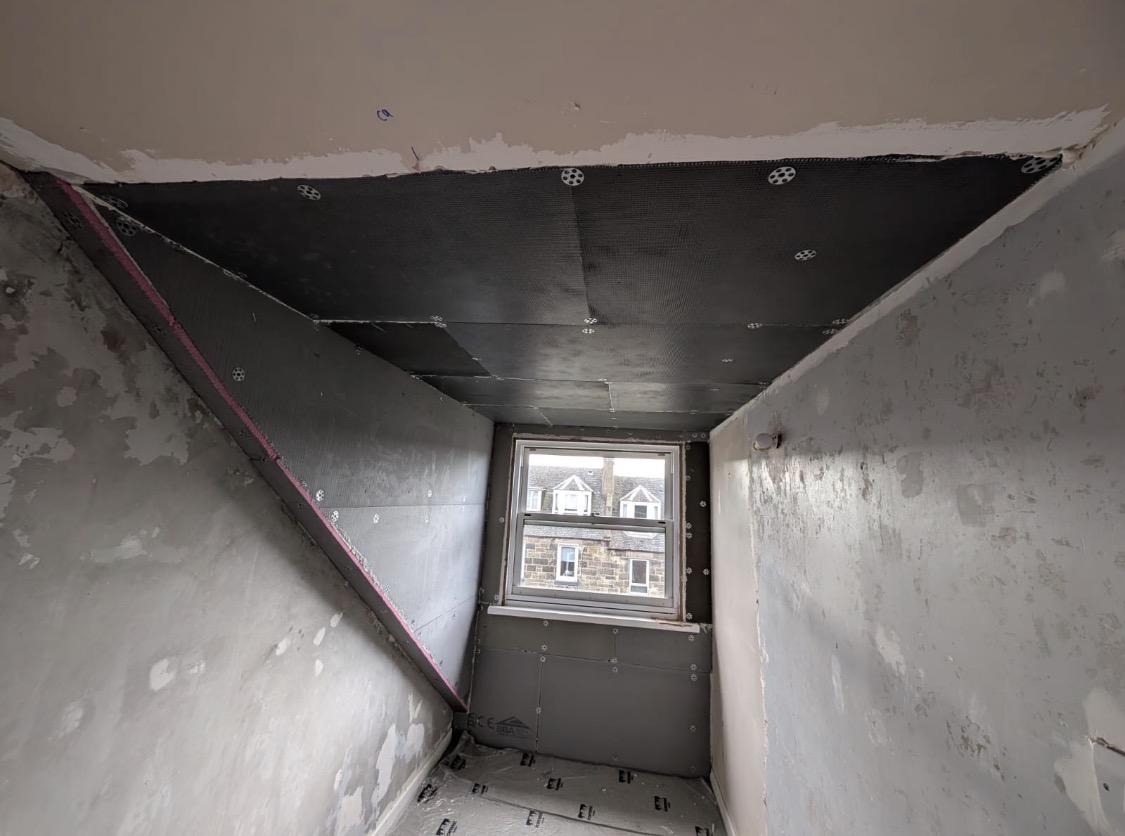
20mm Marmox insulation board used to insulate any reveals or dormers where space is limited and second layer of Hemp not practical to install
- Step 10
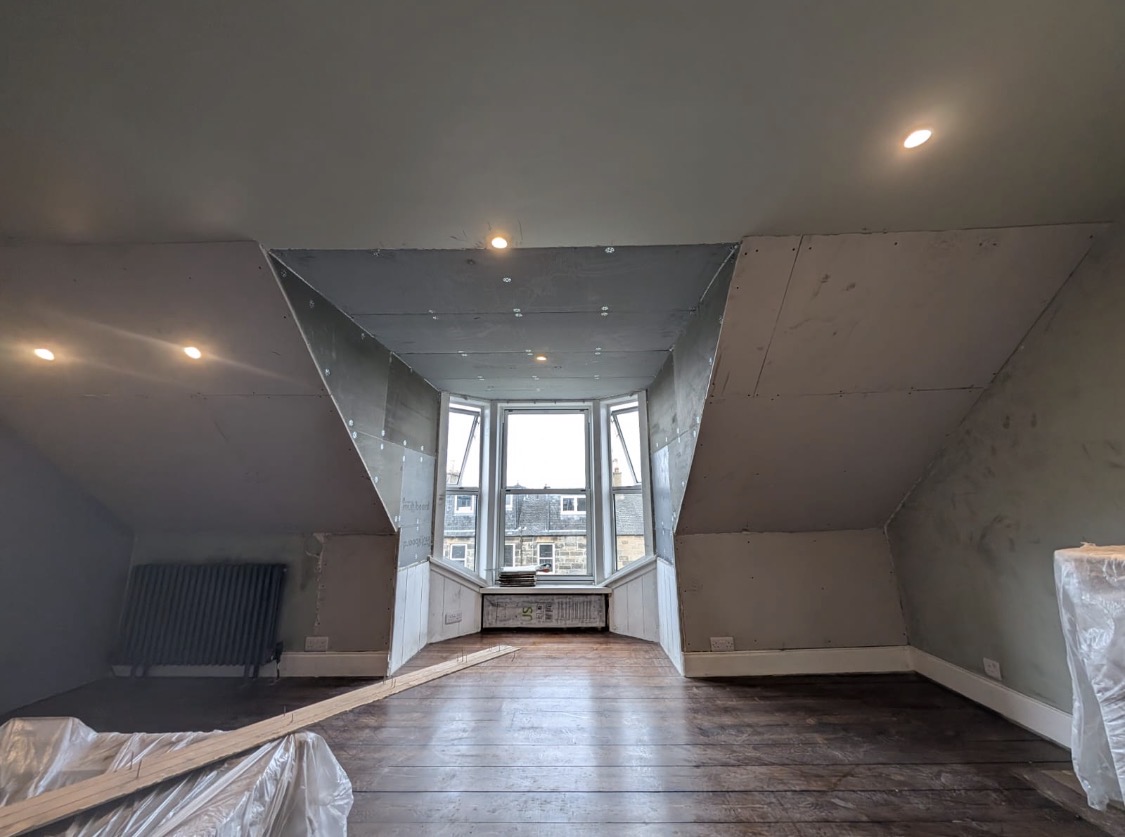
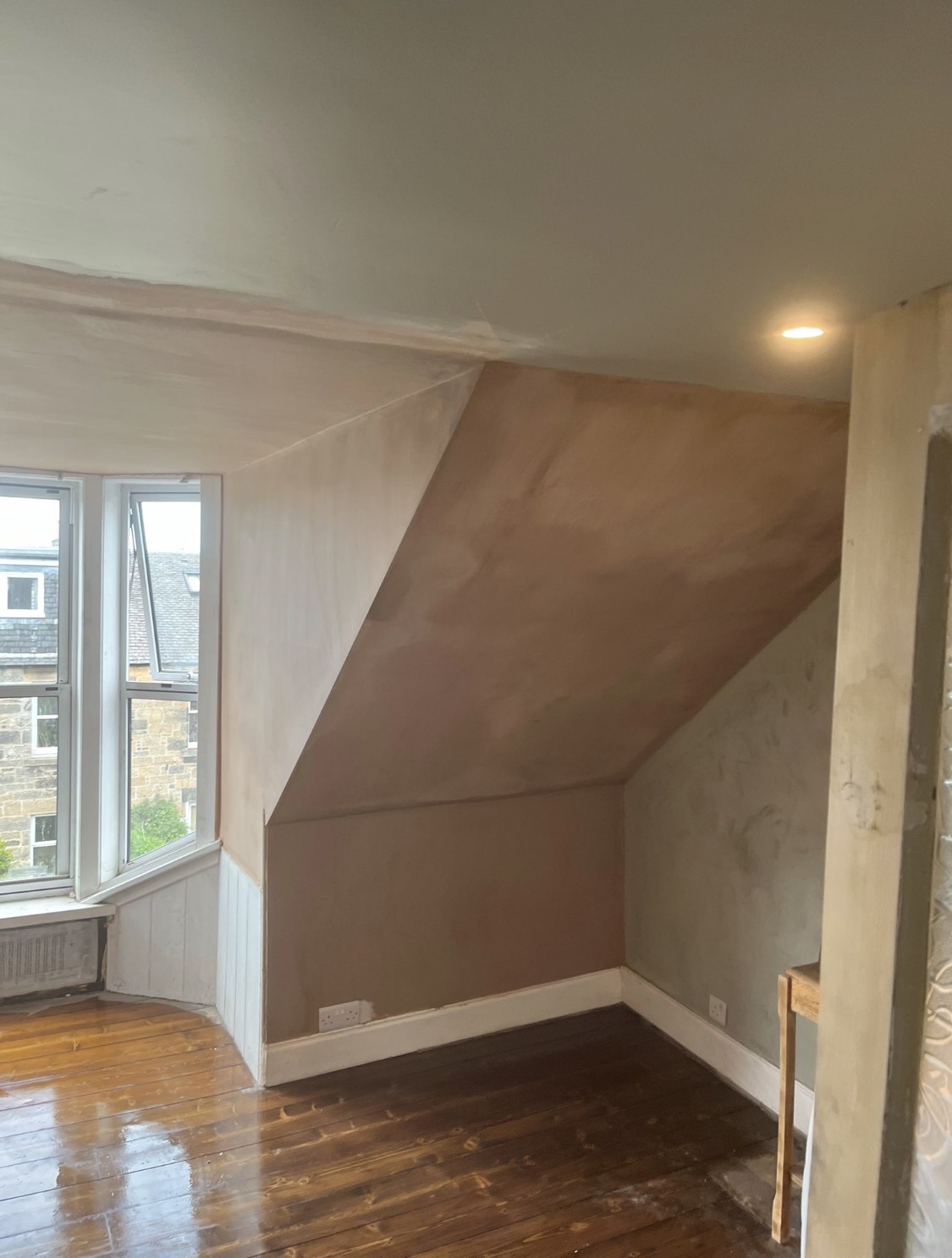
Plasterboard installed to all areas
- Step 11
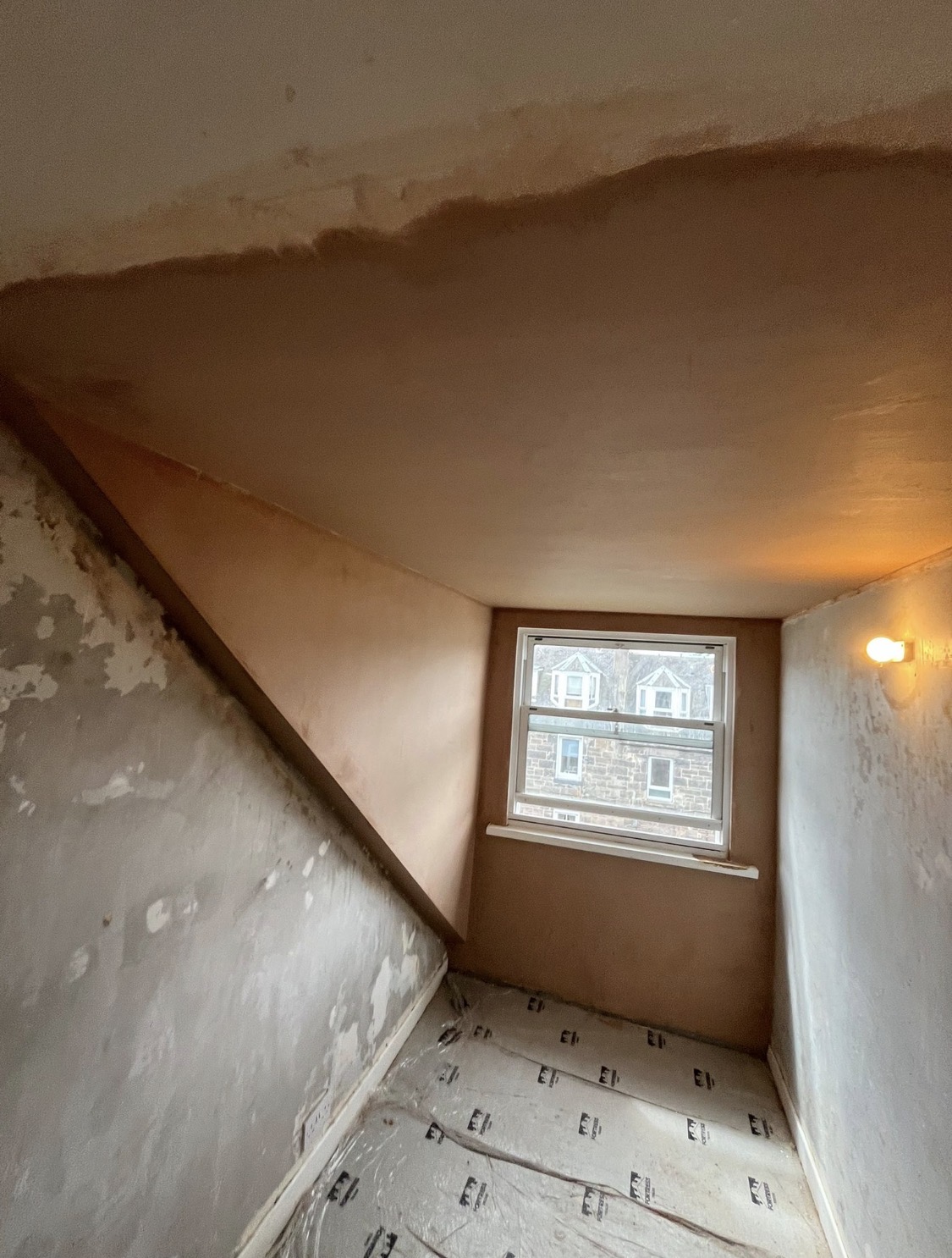
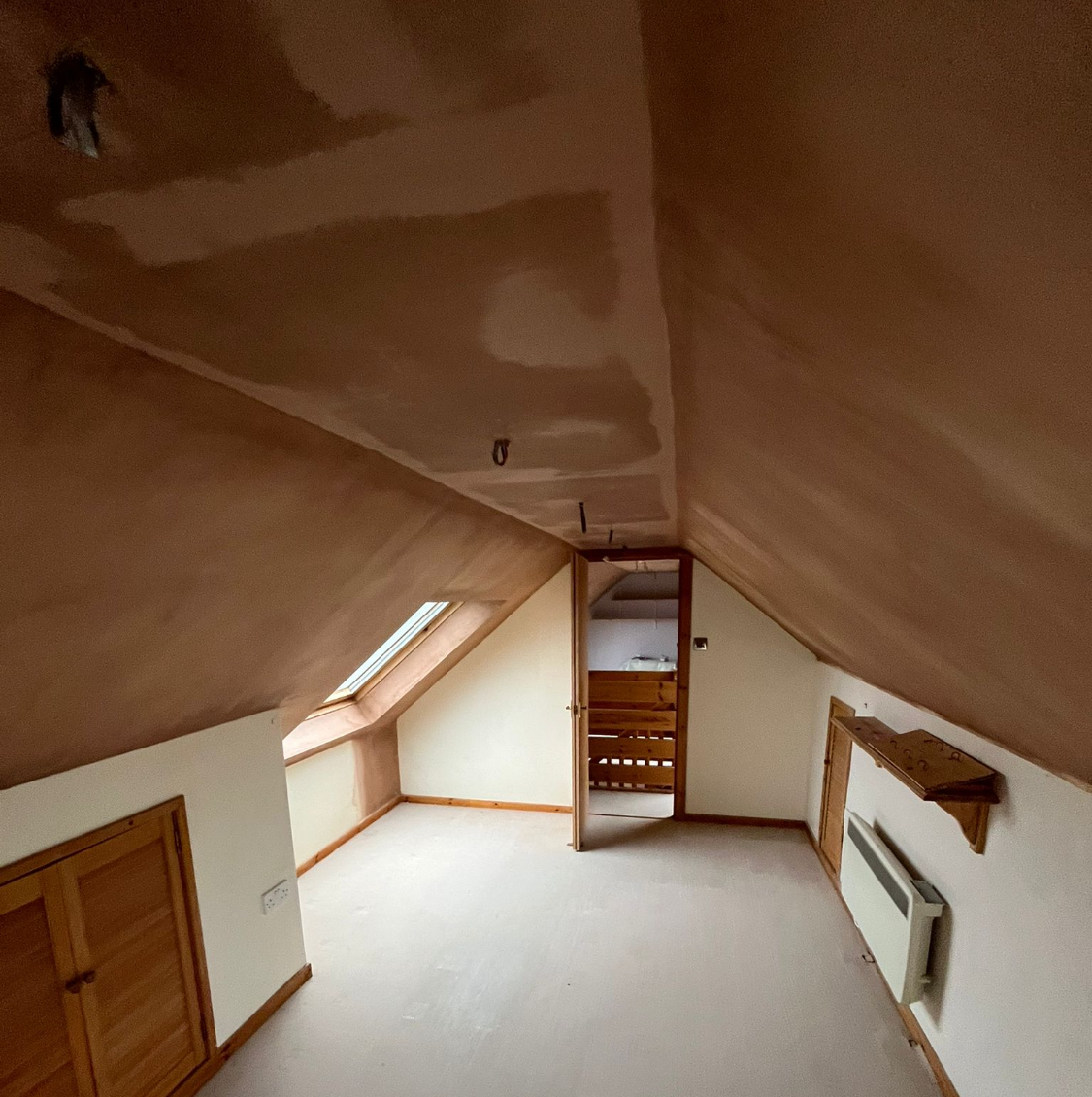
All boarded areas taped and skimmed with multifinish plaster
Hemp Insulation Method
PIR and Multifoil Method
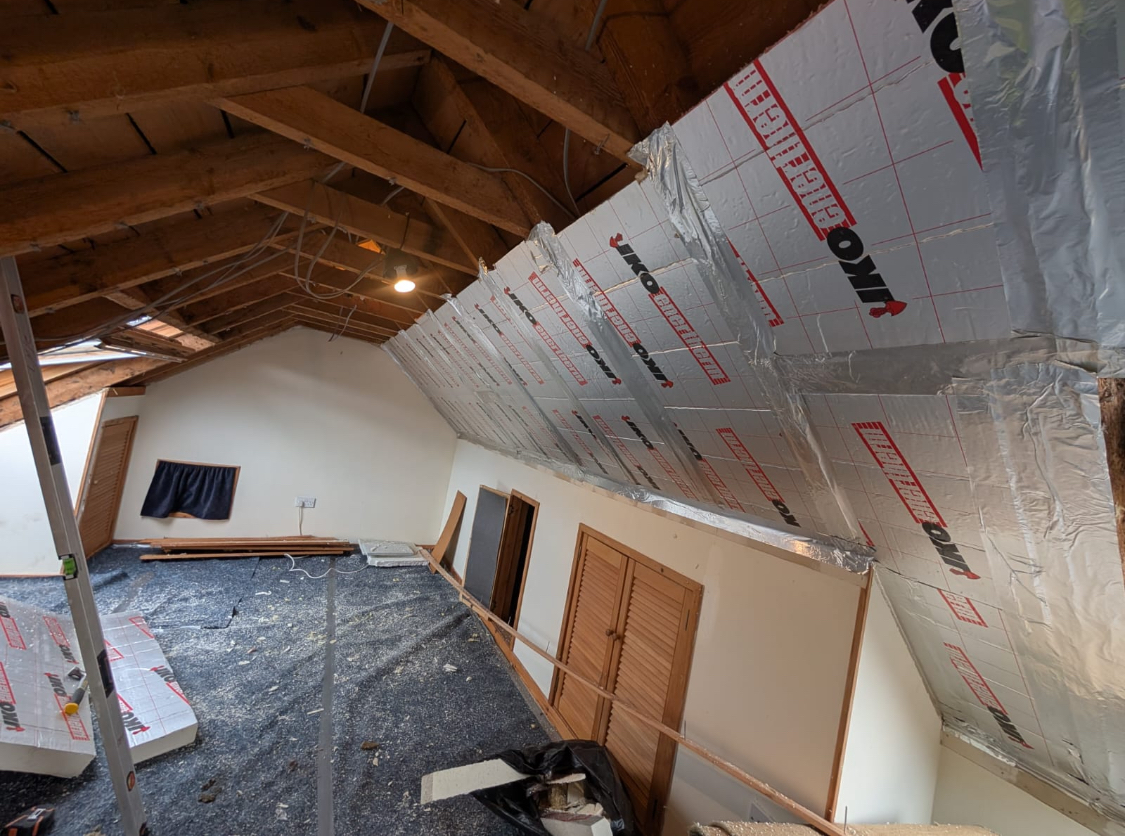
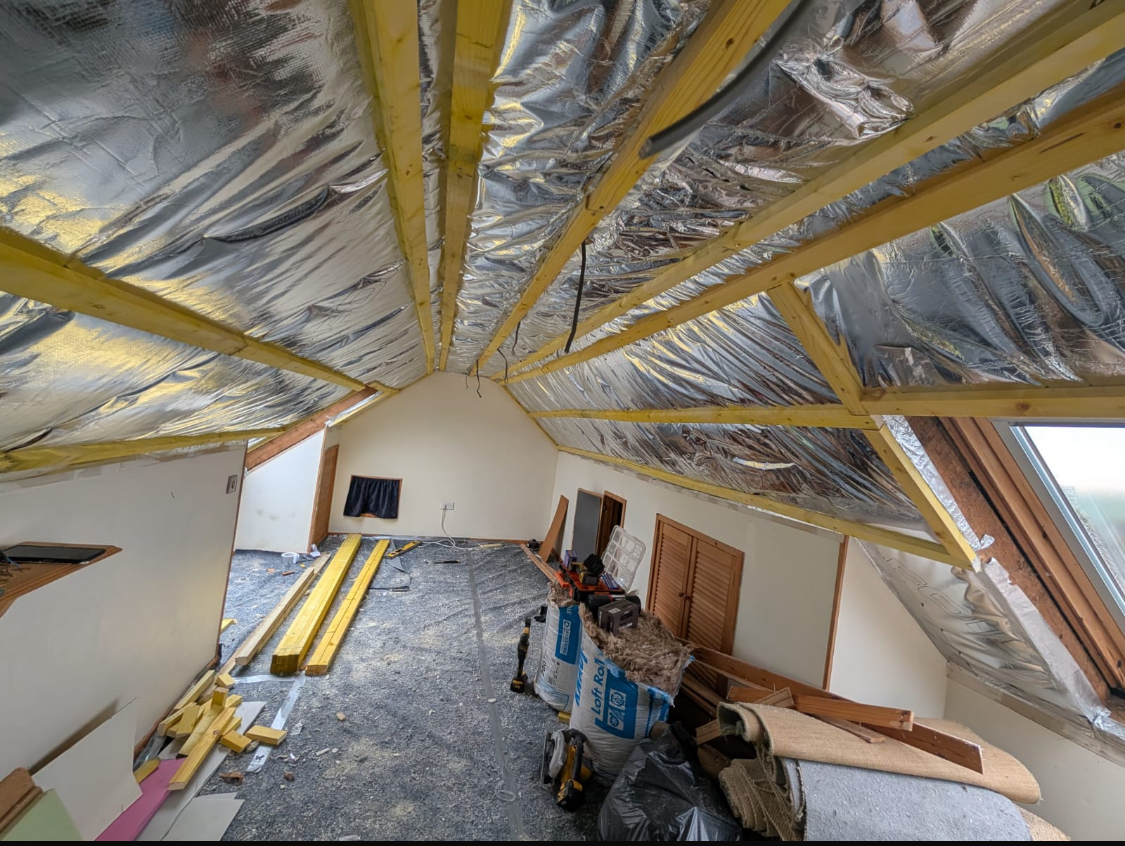
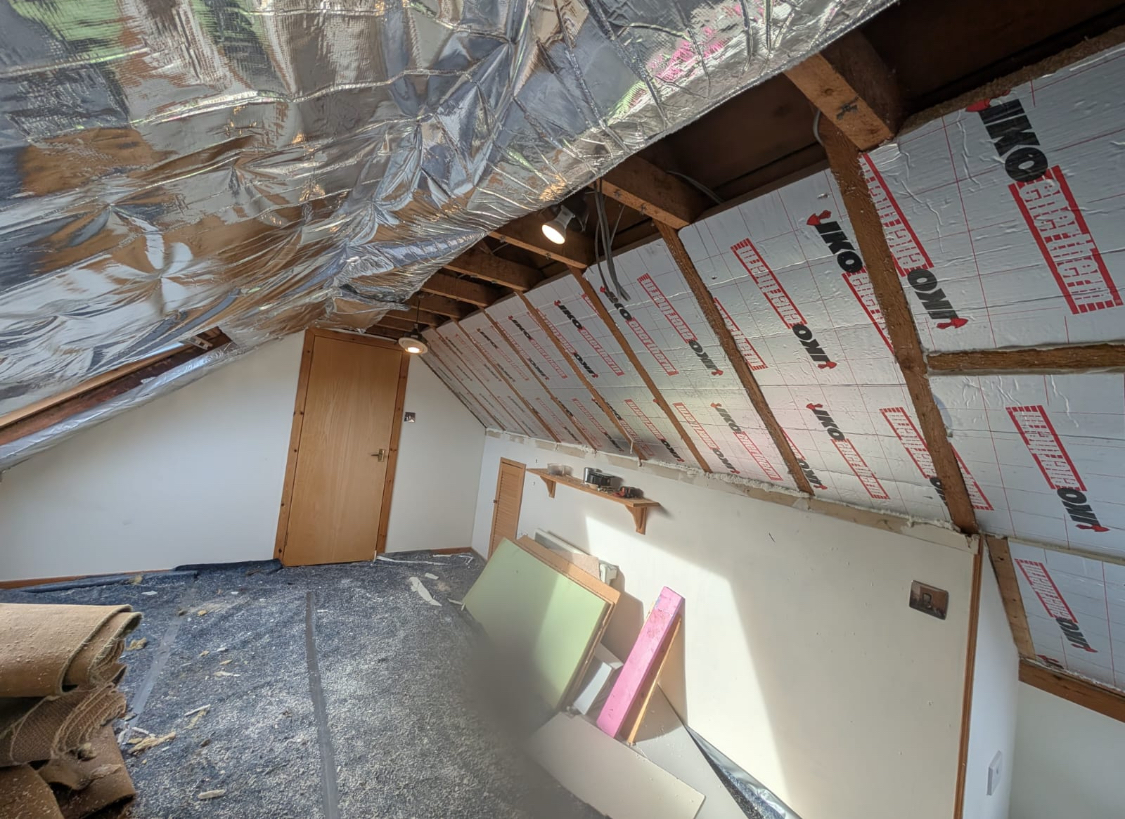
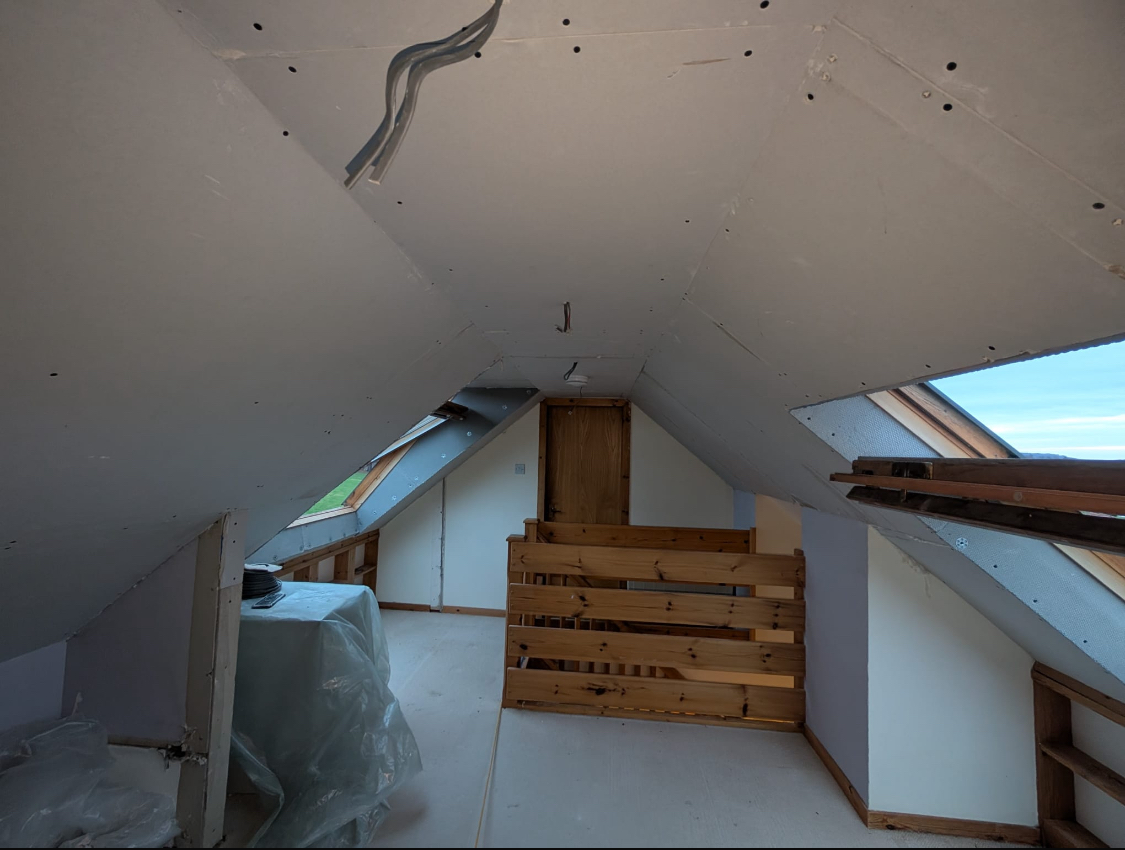
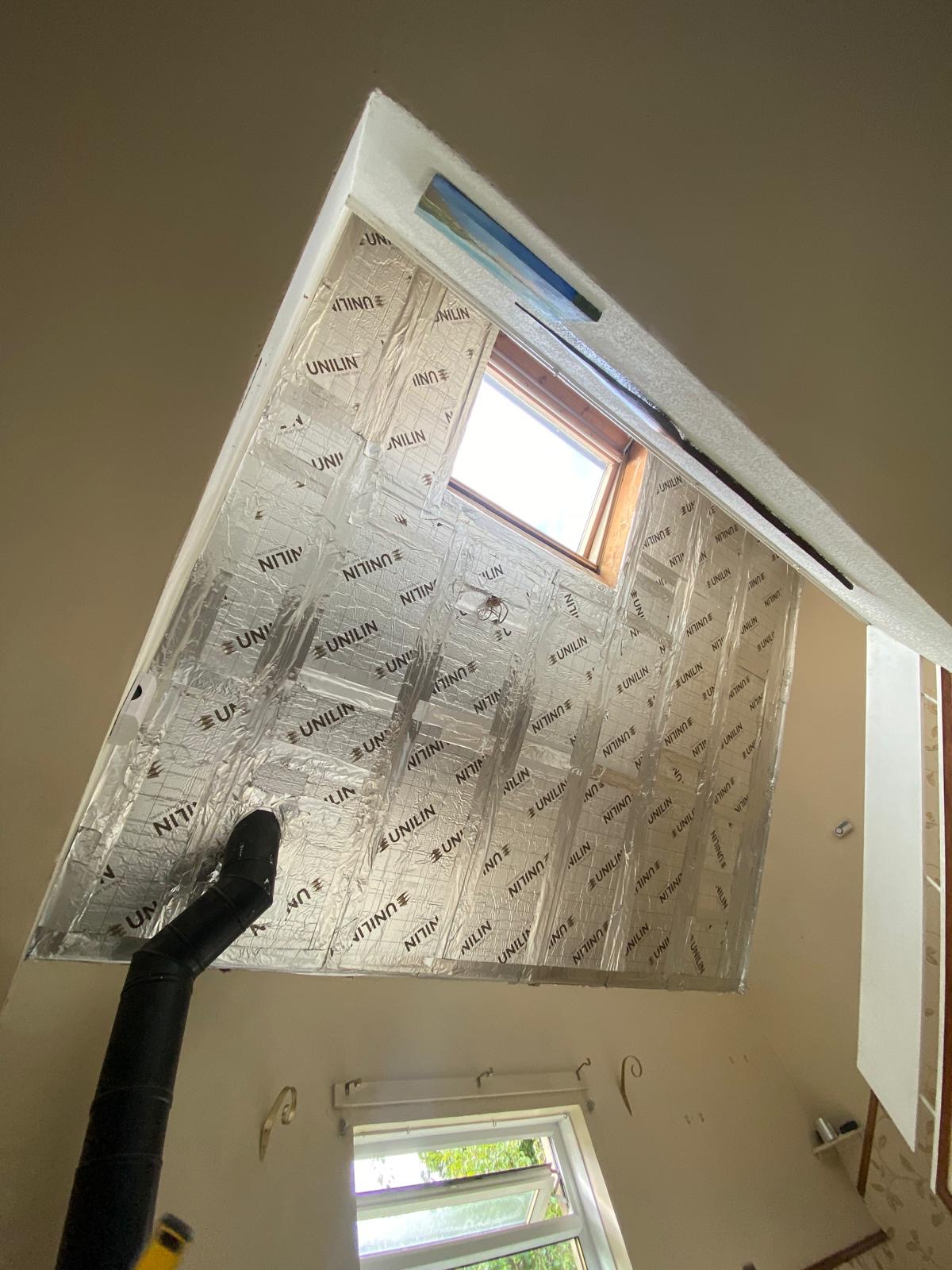
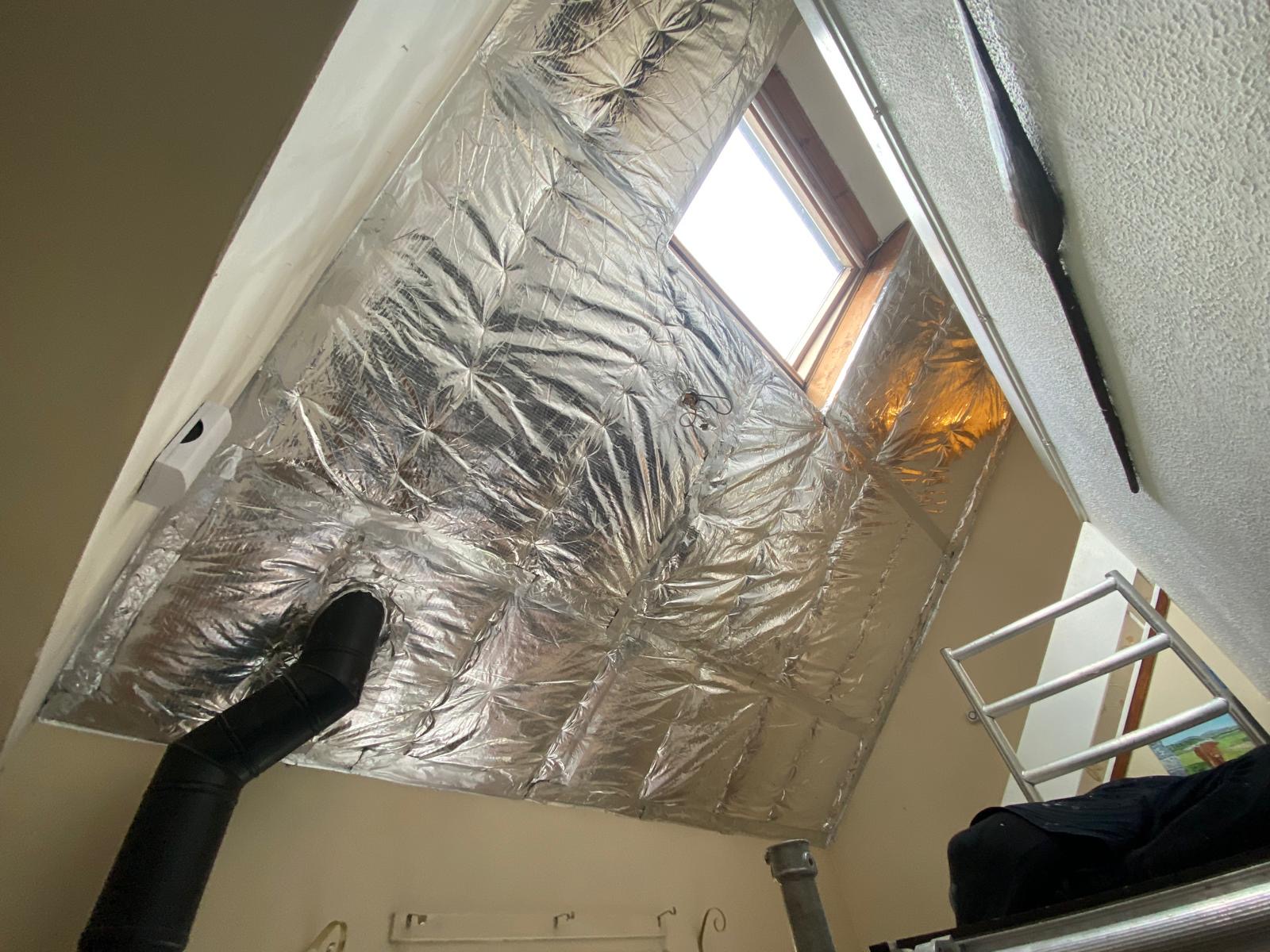
For projects where removal of the existing ceilings is possible the higher performing solution is to remove and dispose of these to expose the rafters and take advantage of the space in between them for additional insulation. We use high performance PIR insulation with a 50mm air gap left behind the insulation to maintain airflow from the eaves to the upper loft spaces and prevent interstitial condensation. This solution while slightly more expensive allows us to install 200%–300% more insulation in the sloping ceilings for a much higher thermal performance and consistent level of insulation across all elements of the job.
Typical cost: £6,000–£12,000
Process
- Step 01
Residual loft spaces and stud walls are insulated with Knauf Earthwool 44 with access created where required
- Step 02
Remove existing plasterboard or lath and plaster sloping ceilings and dormer elements and dispose of waste
- Step 03
Install PIR insulation to optimal thickness to leave 50mm ventilation gap between insulation and roof
- Step 04
Tape all joins with foil tape
- Step 05
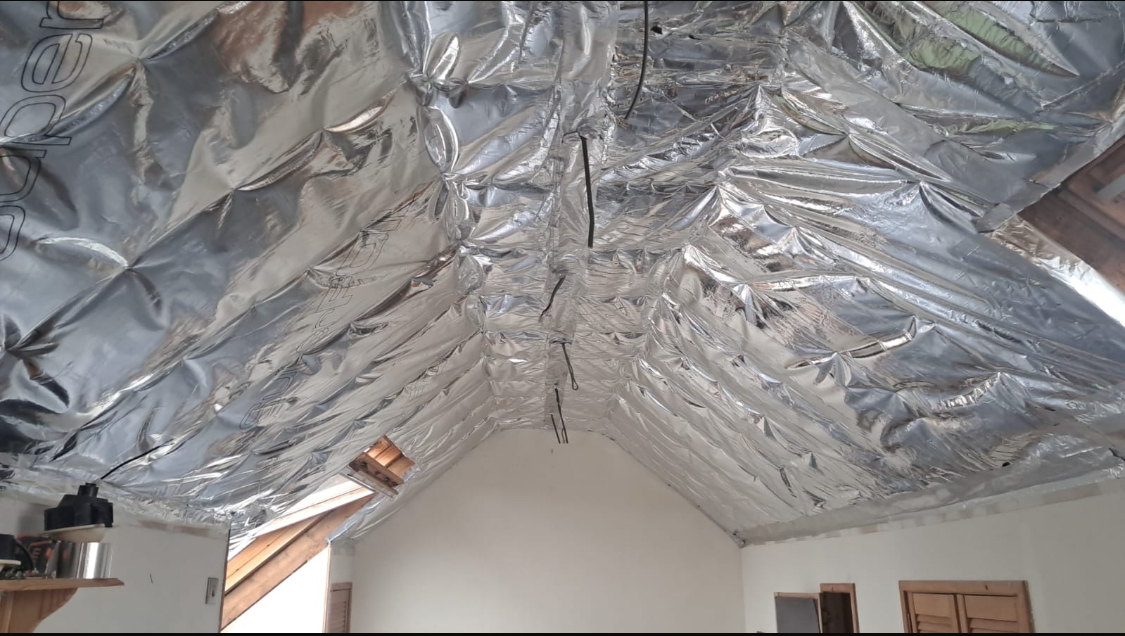
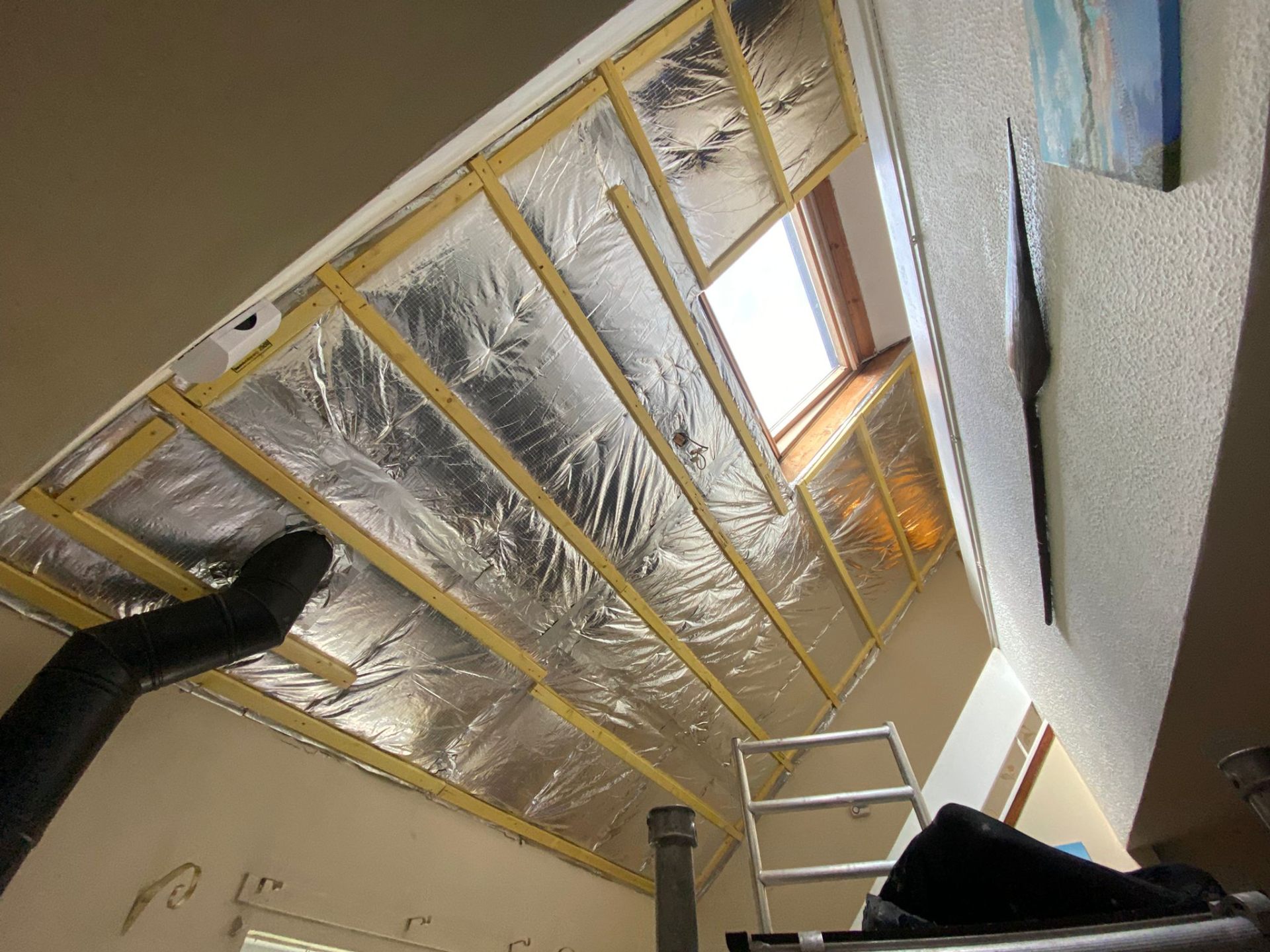
Install Superfoil SF19+ multi-foil on top of PIR to provide airtightness layer and additional insulation across entire surface
- Step 06
Batten foil to create airtight seal and provide fixing points for plasterboard
- Step 07
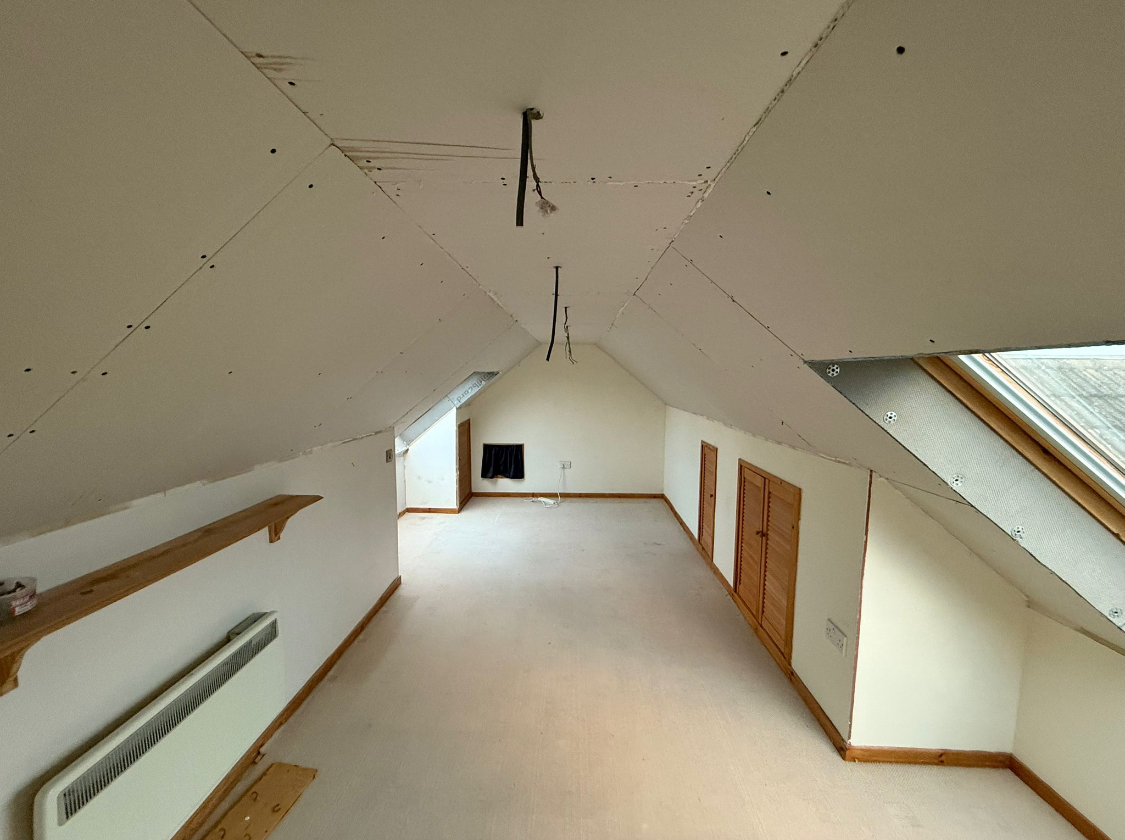
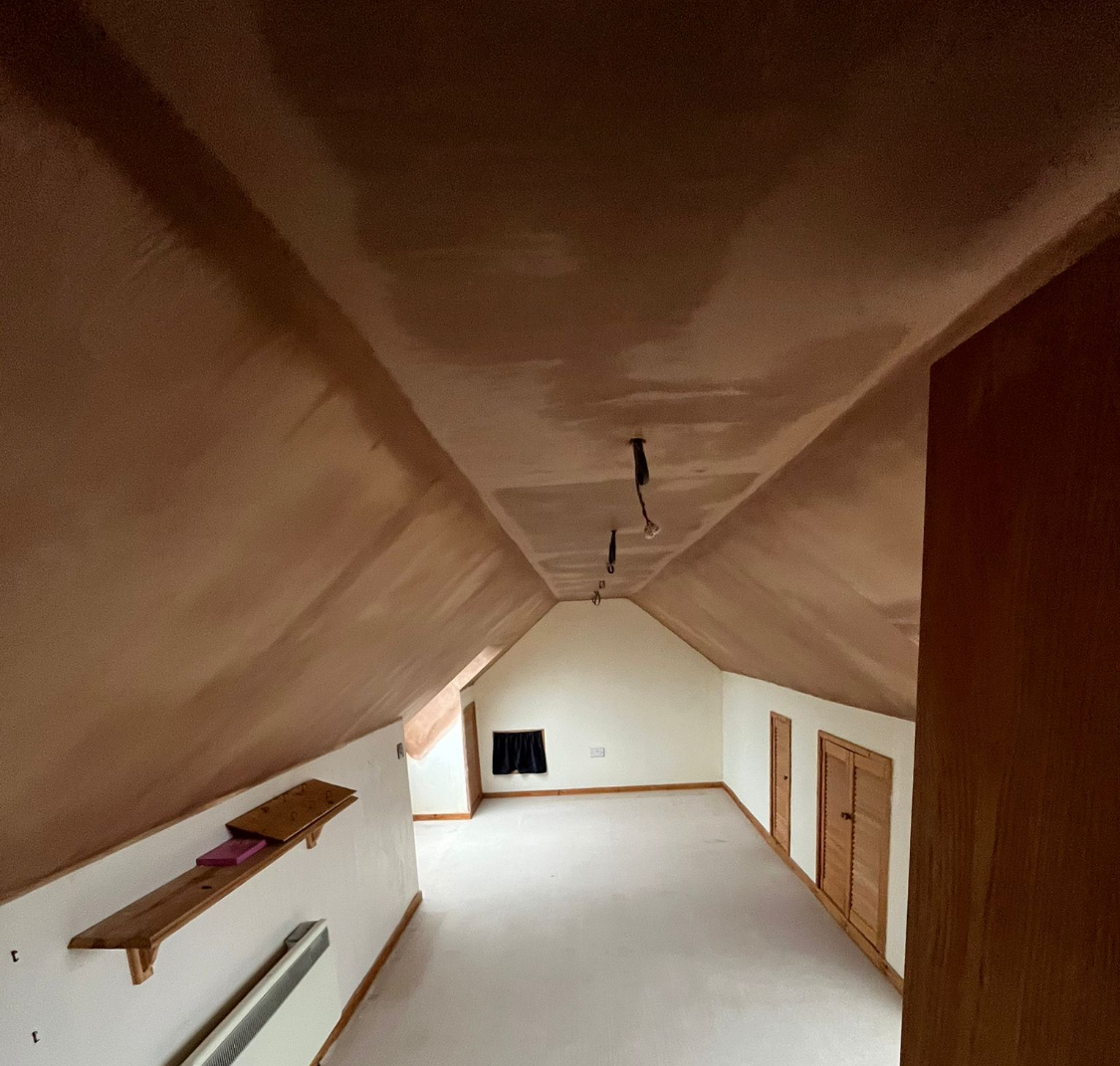
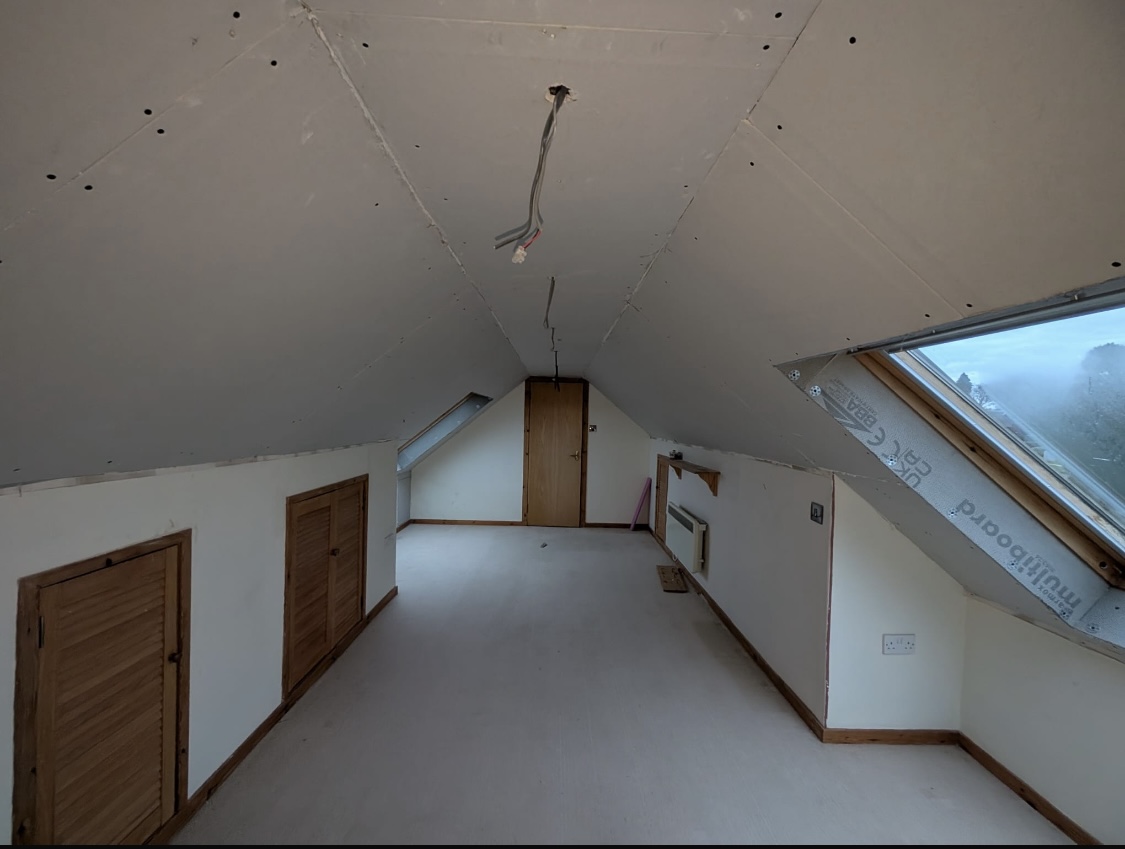
Board all freshly insulated surfaces
- Step 08
All boarded areas taped and skimmed with multifinish plaster
PIR and Multifoil Method
Over-boarding Method
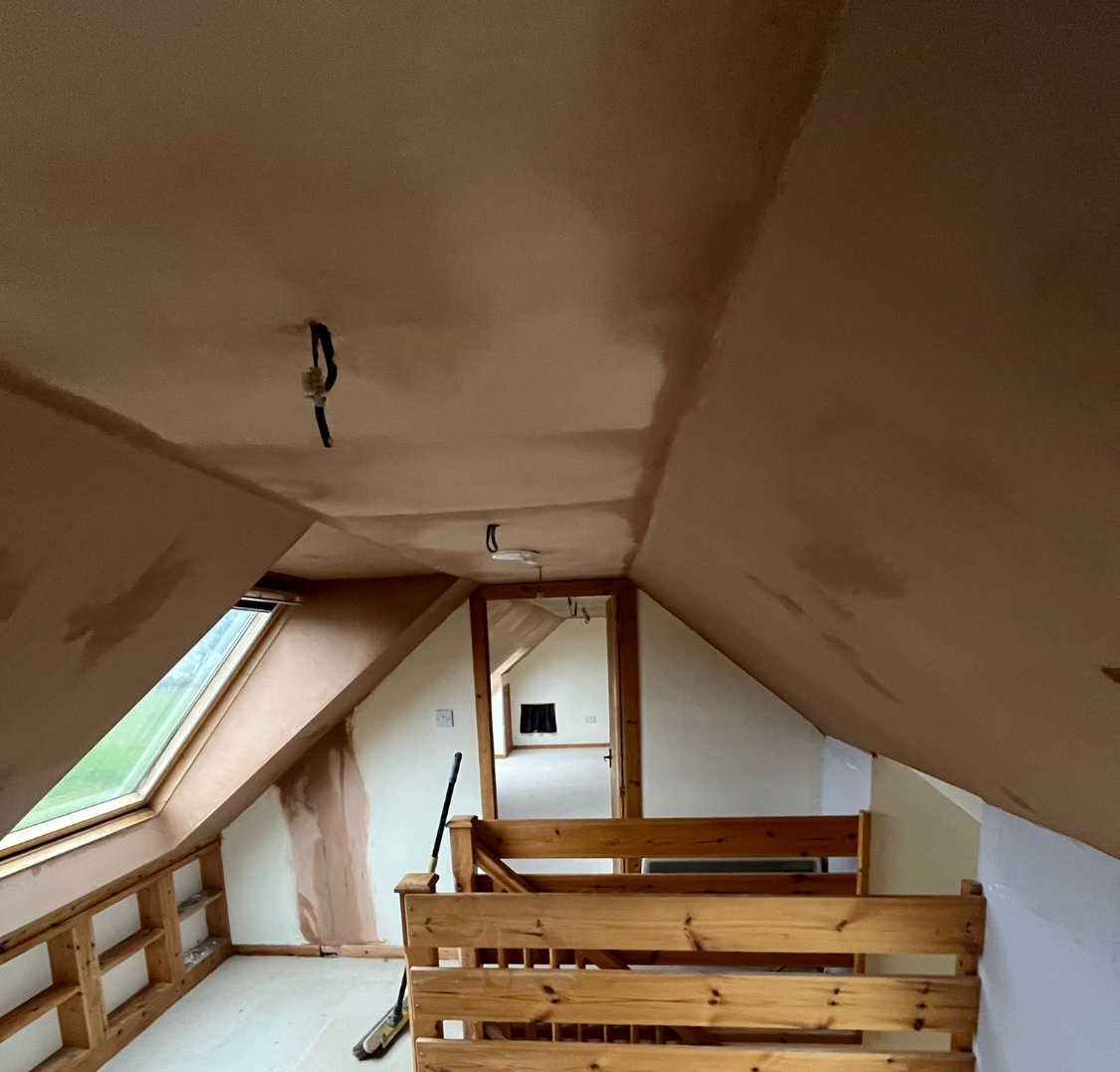
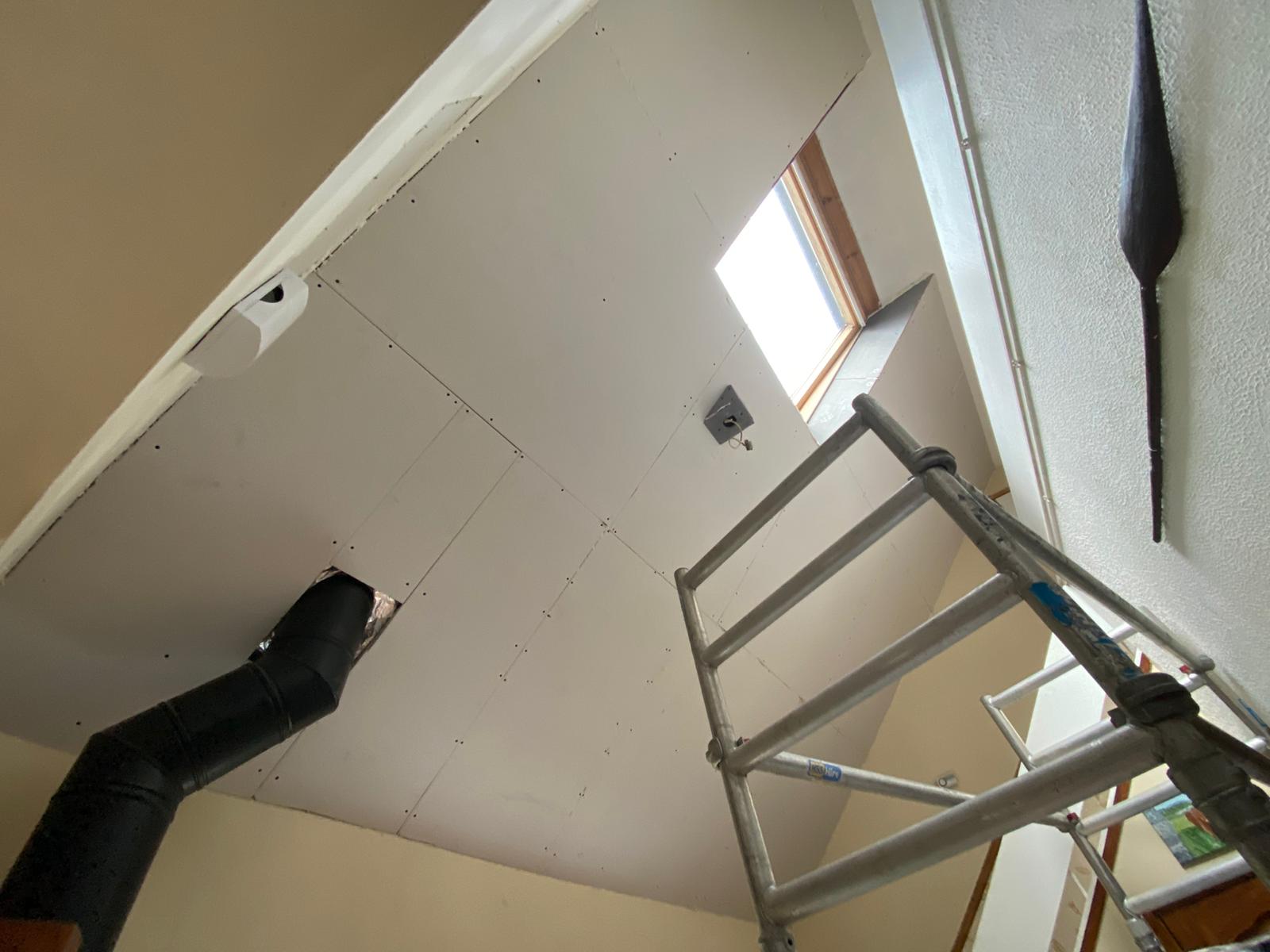
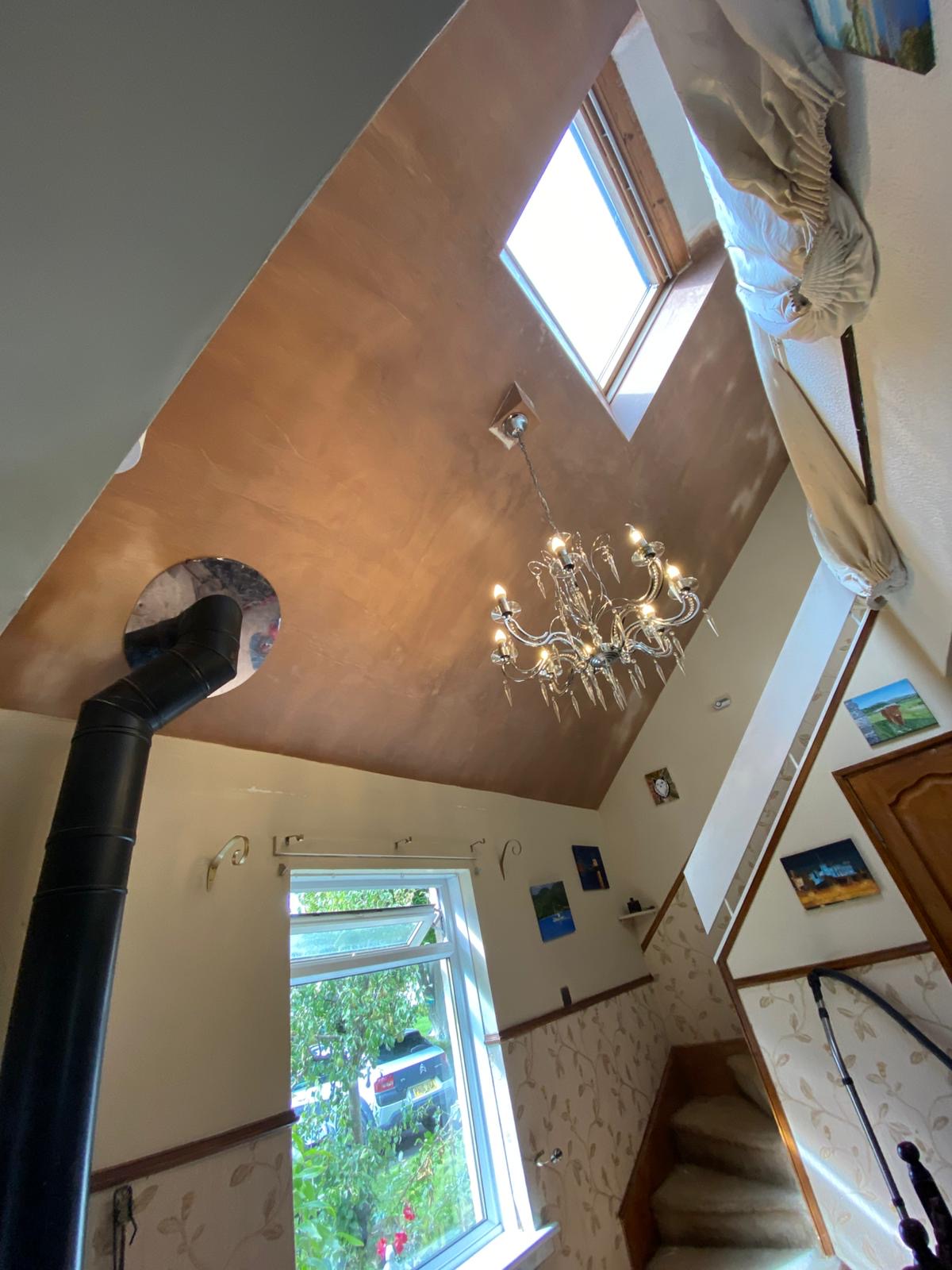
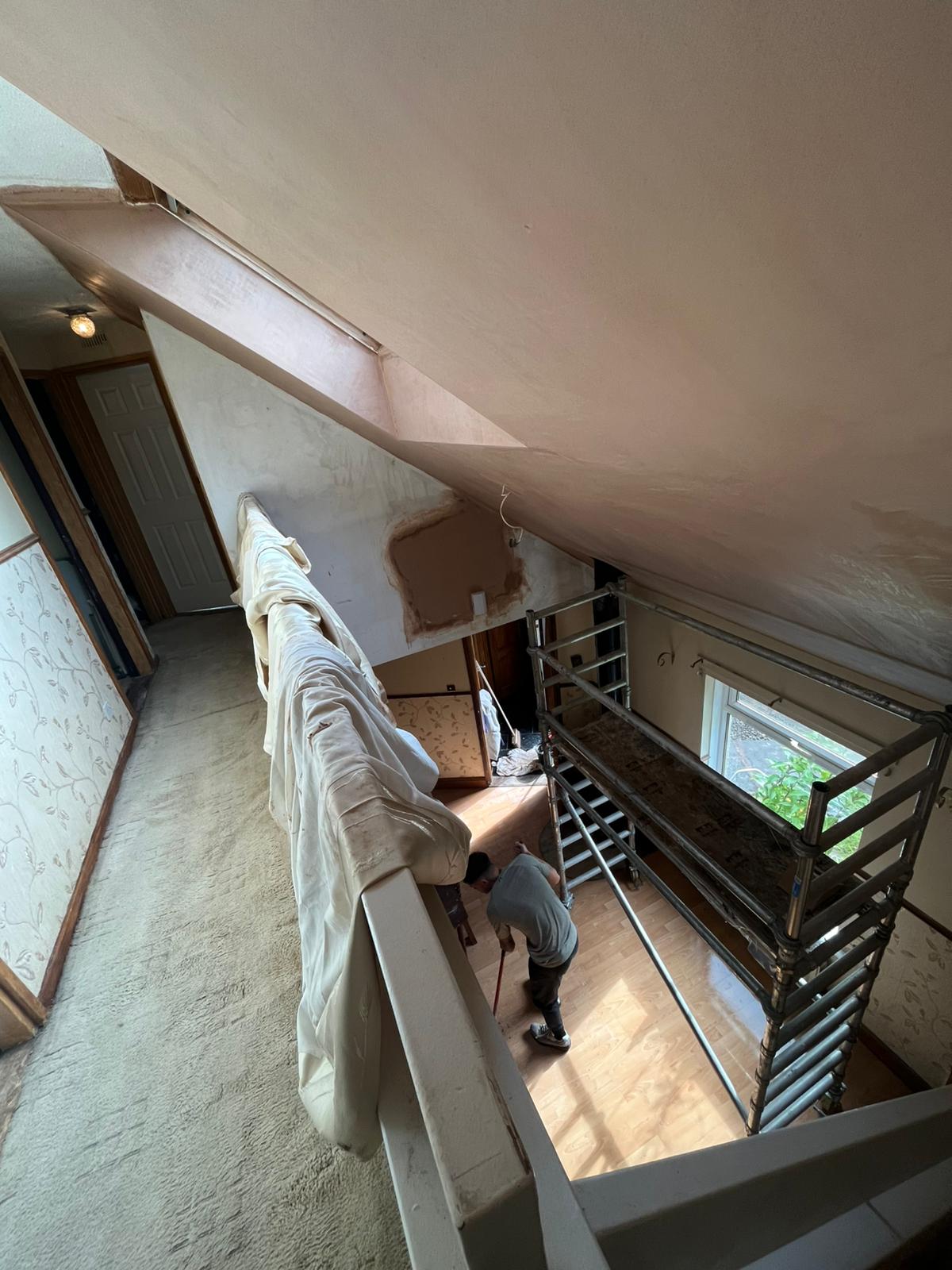
This is the cheapest and least disruptive way to insulate the more expensive elements of a room in roof. It consists of adding a layer of insulation over the existing sloping ceilings and dormers. We can use insulated plasterboard in various thicknesses or multi-foil insulation, battens and plasterboard to make a considerable difference to the thermal performance of the areas most susceptible to heat loss without having to remove the existing ceilings.
Typical cost: £5,000–£10,000
Process
- Step 01
Residual loft spaces and stud walls are insulated with Knauf Earthwool 44 with access created where required
- Step 02
Insulated plasterboard is attached on top of existing ceilings and around dormer elements
- Step 03
Alternatively sloping ceilings are battened with 25mm treated timber with a layer of multi-foil installed and additional 25mm batten and plasterboard over the top
- Step 04
All boarded areas taped and skimmed with multifinish plaster
Loft Insulation
One of the most effective ways to improve a home's energy efficiency — lower bills, better comfort and decades of payback.
Internal Wall Insulation
Bespoke vapour-closed and heritage vapour-open systems for solid-wall Welsh homes — without changing the outside of the building.
Cavity Wall Insulation
Fill the gap between your walls with non-absorbent EPS bead — a one-day job with decades of payback.